Food Shipping Pillar Guide · Rules, Costs & Packaging
International Food Shipping from India — Rules, Costs & Packaging Guide
From a son in Texas asking for podi and pickles, to a Thanjavur exporter shipping bulk orders of packaged snacks, to someone sending a festival hamper to a friend in London — international food shipping from India covers a huge range of needs, and an equally wide set of rules. This pillar guide brings all of it together in one place.
Below you'll find what food you can and can't ship, how it's priced by weight and destination, the customs paperwork required, and country-specific import rules for the USA, UK, Canada, Australia, UAE and Singapore. If you're sending homemade food specifically, or a Tanjore painting alongside your food box, jump to the linked deep-dive guides for those topics.

Customs & Shipping Consultant, ShipHit


Table of Contents
- Can You Ship Food Internationally from India?
- Types of Food You Can Ship Abroad (By Difficulty)
- Restricted & Prohibited Food Items
- How to Pack Food for International Shipping
- International Food Shipping Rates & Transit Times
- Customs Documentation for Food Shipments
- Country-Wise Food Import Regulations
- Why Choose ShipHit for International Food Shipping
- Frequently Asked Questions
Can You Ship Food Internationally from India?
Yes — a large share of what ShipHit ships every day is food. Dry spices, oil pickles, packaged snacks, sweets, tea and coffee, and shelf-stable homemade items can all be shipped abroad when they're packed, labelled and declared correctly. The two things that matter most are moisture content (dry and sealed travels best) and accurate labelling (customs needs to know exactly what's inside).
This guide is the hub for international food shipping from India— for two common, specific scenarios, see these focused guides:
Types of Food You Can Ship Abroad (By Difficulty)
Not all food is equal when it comes to international shipping. Dry, sealed and shelf-stable items are the easiest; oils and dense items add cost; anything fresh or perishable isn't shippable at all. Here's how common categories stack up:
Dry Spice & Podi Mixes
Lightweight, long shelf life, easy to declare — among the simplest items to ship.
Packaged Dry Snacks
Sealed mixture, murukku, chips and namkeen in retail packaging ship with minimal issues.
Tea & Coffee
Roasted, ground and sealed — one of the most commonly shipped categories worldwide.
Sweets (Ghee-Based)
Low-moisture sweets like mysore pak and laddoo travel well if sealed and cushioned.
Oil Pickles
Heavier and prone to leaks if not double-sealed — needs careful jar packing.
Nuts, Seeds & Dry Fruits
Generally easy, but Australia and UAE customs scrutinise raw seeds and certain nuts.
Ghee & Dairy (Bulk)
Small sealed jars sometimes pass, but bulk dairy is restricted in most countries.
Fresh Herbs & Leaves
Curry leaves, coriander and similar fresh plant material are blocked by most countries.
Cooked / Perishable Food
Curries, batter and any refrigerated dish cannot survive transit and aren't accepted.
Restricted & Prohibited Food Items
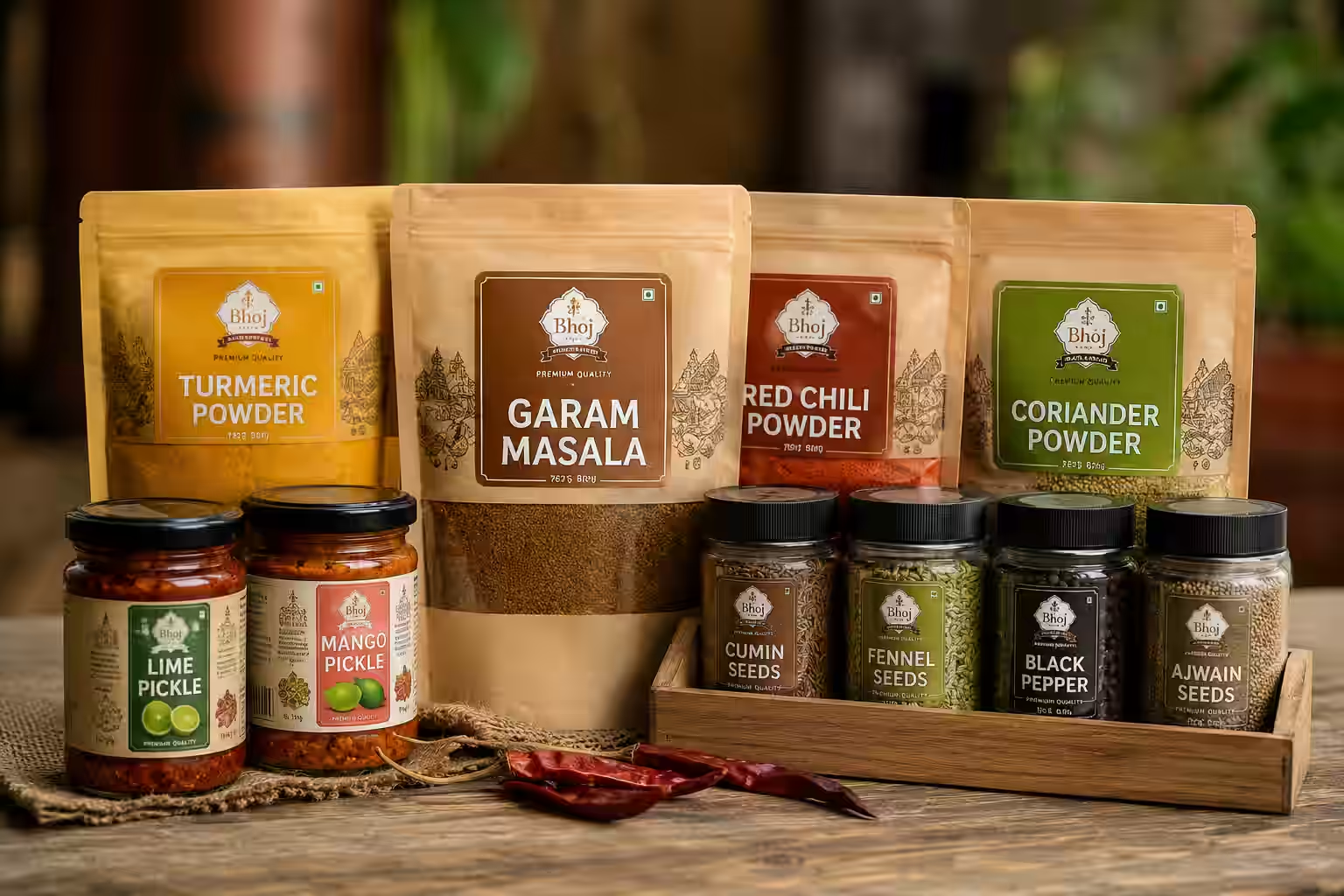
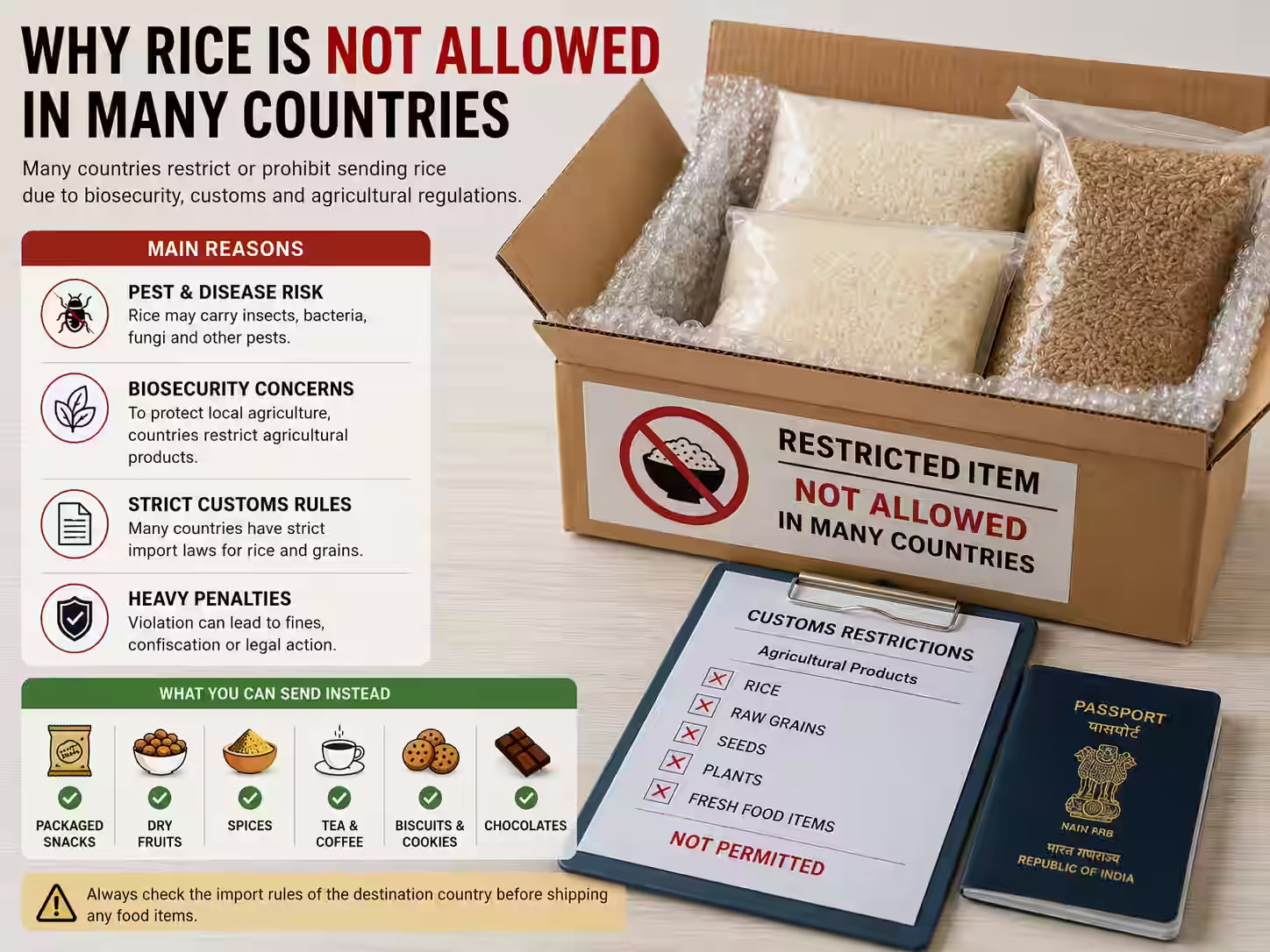
Across nearly every destination country, the following categories are either fully prohibited or so heavily restricted that they aren't worth attempting to ship:
Fresh Fruits & Vegetables
Banned under agricultural import rules in almost every country due to pest and disease risk.
Fresh or Frozen Meat, Fish & Seafood
Prohibited for personal shipments in nearly all destination countries without specific import licences.
Dairy Products in Bulk (Ghee, Paneer, Milk)
Small, sealed quantities sometimes pass; bulk dairy shipments are restricted or require special certification.
Fresh Plant Material, Seeds & Saplings
Curry leaves, fresh turmeric, betel leaves, seeds for planting and saplings are blocked by biosecurity rules, especially in Australia and the UAE.
Home-Cooked Perishable Dishes
Curries, sambar, rasam, idli/dosa batter and any item requiring refrigeration cannot survive a multi-day international shipment.
Unlabelled or Undeclared Items
Anything without a clear ingredient label is at high risk of being held, returned or destroyed at customs — regardless of what it actually contains.
How to Pack Food for International Shipping
Cool & Dry Before Packing
Any home-prepared item must be at room temperature and free of surface moisture — this is the single biggest factor in shelf life during transit.
Use Airtight, Leak-Proof Containers
Jars and tins should be double-sealed — a layer under the lid plus tape around the rim — so nothing leaks even if the parcel is tipped.
Cushion Each Item Separately
Wrap jars, tins and packets individually in bubble wrap or cloth so they can't knock against each other or crush lighter items.
Label Contents & Ingredients
Every item needs a label naming its contents — this is what customs officers check first, and it's the most common reason parcels get delayed.
Box It in a Rigid Double-Wall Carton
A sturdy outer box with void-fill on all sides keeps the whole shipment rigid, even when stacked under other parcels in transit.
International Food Shipping Rates & Transit Times
Food shipments are priced by chargeable weight — the higher of actual weight and volumetric weight (length x width x height in cm, divided by 5000) — and the transit speed you choose. Here's a general view of how rates and transit times compare by destination:
Consolidating multiple items into one box — instead of several small parcels — almost always brings the per-kg cost down. Use the rate calculator alongside this article for an instant estimate based on your exact weight and destination.
Customs Documentation for Food Shipments
Itemised Invoice
A list of every item in the parcel with quantity and declared value — the foundation document customs uses to assess the shipment.
Ingredient / Content Declaration
A simple description of what each packaged or homemade item contains, especially for spice mixes, pickles and sweets.
Shipping Bill / Airway Bill
Generated by the courier at booking — this is the official document that accompanies the shipment through export and import customs.
Personal-Use Declaration (Where Applicable)
For small homemade or gifted quantities, a personal-use declaration helps the shipment qualify under relaxed personal-import allowances rather than commercial import rules.
ShipHit prepares this documentation as part of the booking process — you don't need to arrange these separately.
Country-Wise Food Import Regulations
USA
Sealed, dry, packaged food for personal use is generally allowed. Meat, dairy and fresh produce are restricted. See shipping to the USA.
UK
Dry snacks, pickles, sweets and spices in sealed packaging are accepted in personal quantities. More on courier to the UK.
Canada
Most sealed, shelf-stable foods are permitted for personal use; meat, dairy and fresh plant material are strictly controlled. See courier to Canada.
Australia
The strictest biosecurity checks of all six — seeds, nuts and certain spice blends can be flagged. Declare everything clearly for shipping to Australia.
UAE
Sealed food in personal quantities is generally accepted, with the fastest transit of all routes. See courier to the UAE.
Singapore
Packaged dry food is generally permitted in personal quantities, though Singapore enforces strict checks on meat and certain dairy products at customs.
Why Choose ShipHit for International Food Shipping
Food-Grade Packing for Every Category
From dry podi to oil pickles to sweets, every item is packed according to its own risk profile — leaks, crushing or spoilage.
Customs Paperwork Handled For You
Invoices, content declarations and shipping bills are prepared correctly, reducing the risk of holds at destination customs.
Doorstep Pickup Across India
Pickup is available across Tamil Nadu — Chennai, Coimbatore, Tiruppur, Pondicherry, Mayiladuthurai — and other major Indian cities.
220+ Countries, Fully Tracked
From 3-5 day UAE deliveries to 5-9 day shipments to Australia, every food parcel is tracked from pickup to doorstep.
Frequently Asked Questions
Is it legal to ship food from India to other countries?
Yes, most dry, packaged and shelf-stable foods can be legally shipped from India as long as they are correctly declared, labelled with ingredients, and fall within the destination country's personal-import allowances. Fresh, perishable and certain restricted categories are not allowed.
What food items can I ship internationally without issues?
Sealed dry snacks, roasted and packaged spices, pickles in oil, dry sweets, papads, dry fruits and nuts, tea and coffee powder, and ready-to-eat retort-packed meals generally ship without major issues to most countries when packed and labelled correctly.
What food items are completely prohibited from international shipping?
Fresh fruits and vegetables, fresh or frozen meat, dairy products like paneer and ghee in bulk, fresh leaves and seeds, home-cooked perishable curries, and any item without ingredient labelling are prohibited or heavily restricted across most destination countries.
How is international food shipping priced from India?
Pricing is based on the chargeable weight (the higher of actual weight and volumetric weight, calculated as length x width x height in cm divided by 5000) and the destination zone. Heavier, denser items like pickle jars cost more per kg than lightweight items like podi and dry snacks.
What documents are needed to ship food abroad from India?
A commercial or personal-effects invoice listing each item, quantity and value, an ingredient declaration for packaged foods, and the courier's standard shipping bill are typically required. ShipHit prepares this documentation as part of the booking process.
Which countries have the strictest food import rules?
Australia and the UAE have the strictest checks, especially on spices, seeds, nuts and any item that could be classified as agricultural produce. The USA, UK and Canada are comparatively more lenient for sealed, packaged dry foods in small personal quantities, but still require accurate declarations.
How long does international food shipping take?
Transit times typically range from 3-5 working days to the UAE and Singapore, and 5-9 working days to the USA, UK, Canada and Australia, depending on customs clearance at the destination airport.
What's the difference between sending pickles and snacks versus sending homemade food?
Branded or home-packed dry items like pickles, podi and snacks are easier to ship because they are shelf-stable and can be labelled clearly. Homemade, freshly cooked food has a short shelf life and higher moisture, so only dry, cooled and well-sealed homemade items should be shipped — see our dedicated guide on sending Amma's homemade food abroad for the full checklist.