
Spice Courier · Courier Mode · Door Pickup · Customs Guidance
International Courier for Sending Pickles, Masala and Spices Abroad: Oil, Seeds and Leak-Proof Packing
Spices and pickles are the two most-requested things in any Indian food parcel, and they fail for opposite reasons. Spices are a plant-health question: customs cares whether something could sprout or carry a pest, which is why ground masala sails through where whole seeds get stopped. Pickles are a physics question: oil under changing cabin pressure will find any weakness in a seal and destroy everything packed around it. This guide covers both — what clears, what does not, and how to pack oil so it cannot betray you.

International Courier Expert, ShipHit
Clears easily
Ground Masala
Roasted and milled spices are processed, not propagative.
Gets stopped
Whole Seeds
Anything that could germinate attracts plant-health rules.
Banned outright
Citrus Leaves
Curry leaves and fresh plant material too.
Pickle rule
Double Seal
Taped lid, sealed bag, absorbent, second bag.
Why ground spice clears and whole seed does not
The distinction that governs this whole category is not heat or aroma. It is whether the thing in the packet could still grow.
Plant-health authorities — APHIS in the USA, DAFF in Australia and their equivalents elsewhere — regulate imports according to the risk of introducing a pest or disease. A seed can germinate and can carry pathogens; a roasted, milled powder cannot. That single distinction explains almost every acceptance and refusal in this category. Dried, cured, cooked or otherwise processed plant products generally enter the USA without a permit or phytosanitary certificate, while many vegetable and fruit seeds are prohibited outright.
| Item | How it is treated | Practical position |
|---|---|---|
| Ground masala, sambar podi, rasam podi, chilli powder | Processed plant product | The easiest things in this guide. Sealed, labelled and declared, they clear routinely. |
| Roasted whole spices — cumin, coriander, mustard | Processed if genuinely roasted | Usually fine, but declare them as roasted. Raw versions of the same spice are treated differently. |
| Raw whole seeds in quantity | Potentially propagative | Restricted in several markets and prohibited in some. Send the ground form instead. |
| Turmeric fingers, dried whole chilli, tamarind | Dried plant product | Generally acceptable, though Australia wants them declared and may inspect. |
| Curry leaves, citrus leaves, fresh herbs | Fresh plant material | Prohibited. Citrus leaves and seeds are named explicitly in US rules. |
| Tea and roasted coffee powder | Processed | Straightforward everywhere, and among the most-requested items. |
| Rice and pulses | Grain — plant-health sensitive | Allowed into many markets but must be declared. Australia is strict and quantity matters. |
When in doubt between whole and ground, send ground. It is the same ingredient with a fraction of the customs risk.
Dried curry leaves are not fresh curry leaves
This is the substitution people most often want. Fresh curry leaves are prohibited plant material almost everywhere. Thoroughly dried or roasted-and-ground curry leaf podi is a processed product and travels normally — which is why curry leaf podi is one of the most reliable things in any Indian food parcel.
Oil: the packing problem that ruins whole parcels
A pickle jar that leaks does not just lose its pickle. It contaminates textiles, soaks cartons and can see the whole consignment refused.
Cabin and hold pressure change repeatedly over a long flight, and every change works at a seal. A jar lid that is perfectly tight on a kitchen counter can weep steadily at altitude. Assume it will, and pack so that it cannot matter.
- Fill the jar to reduce headspace — less air means less pressure differential working on the lid.
- Tape the lid down over the thread, then wrap the whole jar.
- Put the wrapped jar into a sealed poly bag with absorbent tissue or paper around it.
- Put that into a second sealed bag. Two independent barriers is the standard, not one good one.
- Never pack oil next to textiles, paper or documents. If it does escape, the second bag is what saves everything else.
- Glass jars need cushioning on all six sides, or send the pickle in food-grade plastic instead.
- Keep pickles at the bottom of the carton so nothing heavy sits above them.
Australia treats preserved differently from fresh
Jam, chutney, pickles and bottled or canned fruit and vegetables are permitted into Australia when preserved by an accepted method — the preservation is what removes the biosecurity risk. That makes a properly made oil or vinegar pickle one of the few wet foods that travels to the strictest destination in the world. It still has to be declared.
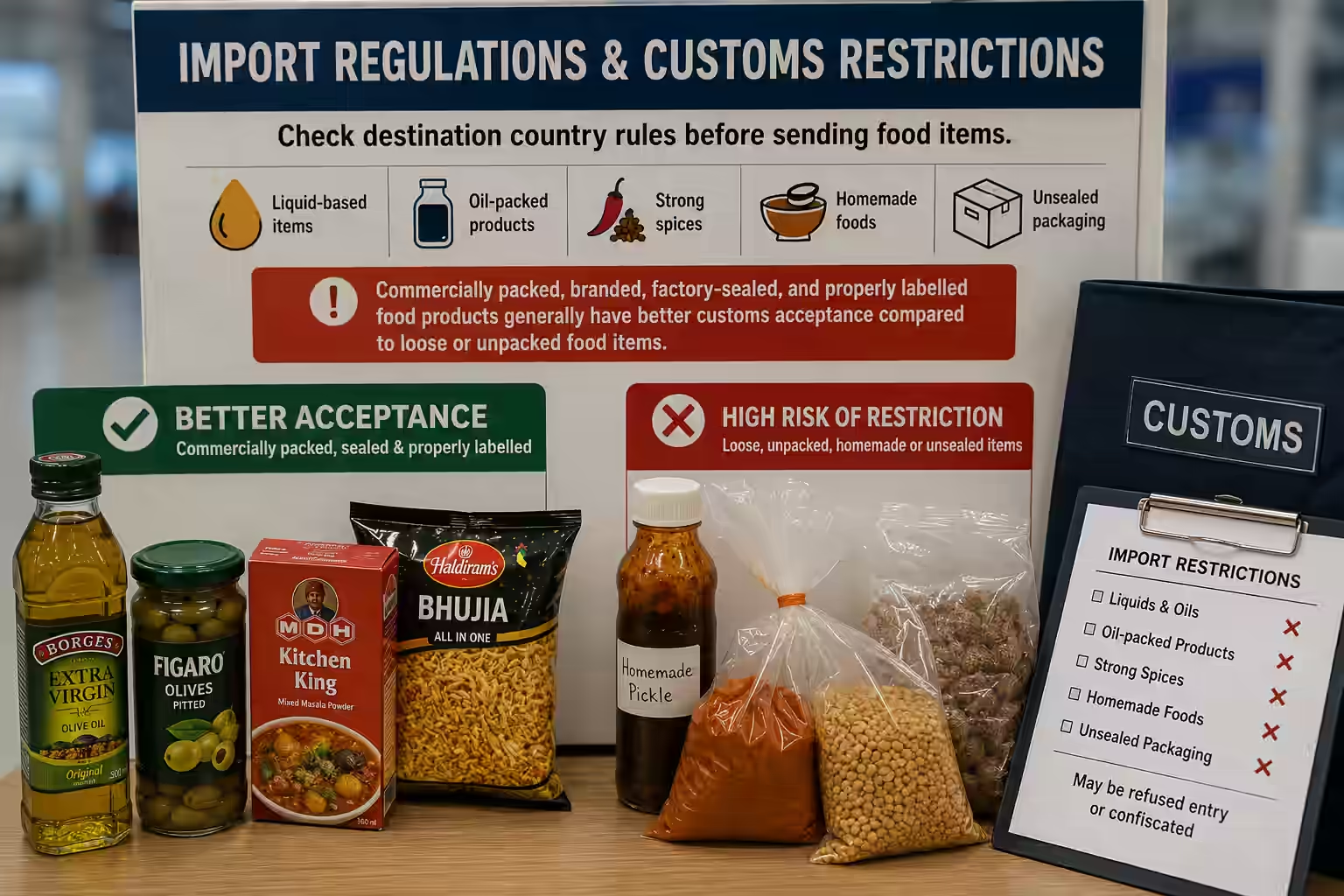
Homemade versus shop-bought
For spices and pickles this cuts both ways, and it is worth deciding deliberately rather than by default.
A factory-sealed branded packet carries a printed ingredient list, a manufacturer and an expiry date, which answers most of an officer's questions before they are asked. That makes commercial masala the smoothest option for a first-time sender. Home-made pickle and podi, on the other hand, have no printed label at all — but if they were made at home and sent as a personal gift, they attract a US exemption that commercial food does not.
The exemption that applies to food cooked in your own kitchen and sent as a personal gift is genuinely useful and widely unknown, and we have set it out with the exact declaration wording in our guide to Homemade food guide which covers podi and pickle specifically.
- Commercial packets: keep them sealed and unopened. Opening a retail packet to decant it removes the very thing that makes it easy.
- Homemade items: hand-label every container with contents, the date made, and "homemade, personal gift, not for sale".
- Do not mix loose unlabelled powders into one bag. Separate, labelled containers clear far faster than a sack of anonymous orange powder.
- Keep the quantity domestic. A dozen identical sealed masala packets reads as retail stock whatever the intention.
Declaring a mixed masala box
A carton holding eight different powders and three jars is exactly the kind of parcel an officer opens — unless the paperwork makes opening it unnecessary.
Write each item separately: what it is, what it is made from, its weight and an honest value. "Spices" invites an inspection. "Sambar podi 250g, ground, homemade" does not. Where an item is roasted or ground, say so — those words are what move it from the plant-health category into the processed one.
What each destination allows — the USA, UK, EU, Canada, Australia and the Gulf — is set out once in our International food shipping guide rather than repeated on every food page.
Pickles should never share inner packaging with dry snacks, and the savoury side of a food parcel has its own requirements — see our guide to Homemade indian snacks guide if the same carton is carrying murukku or mixture.
Collection is from the door across Tamil Nadu, with most consignments routing through our Send spices & pickles from Chennai and branches in Coimbatore, Tiruppur, Pondicherry and Mayiladuthurai.
- Name each spice individually rather than writing a single line for the box.
- State roasted or ground explicitly wherever it is true.
- Declare rice, pulses and nuts even where you believe they are permitted — Australia in particular penalises non-declaration far more heavily than it restricts the food itself.
- Keep sender KYC and the receiver's full address, postcode and phone ready before pickup.
Frequently Asked Questions
Can I send Indian pickles abroad by international courier?
Yes, to most destinations. The pickle is rarely the problem — the oil is. It needs a filled jar with the lid taped, the jar wrapped and sealed in a poly bag with absorbent material around it, then a second sealed bag. Australia permits pickles and chutneys preserved by an accepted method, which makes a properly made oil or vinegar pickle one of the few wet foods that clears there.
Are whole spices treated differently from ground masala?
Yes, and this is the key distinction in the whole category. Ground and roasted spices are processed plant products and clear routinely. Whole raw seeds can germinate and carry pests, so they attract plant-health rules and are restricted or prohibited in several markets. If you have a choice, send the ground form.
Can I send curry leaves abroad?
Not fresh — fresh curry leaves are prohibited plant material in almost every destination, and citrus leaves and seeds are named explicitly in US rules. Thoroughly dried curry leaves or curry leaf podi are processed products and travel normally, which is why podi is the reliable way to send that flavour.
Do I need a phytosanitary certificate for spices?
Generally not for personal quantities of dried, cured, cooked or processed spices, which may be imported into the USA without a permit or phytosanitary certificate. Raw agricultural commodities and seeds are a different matter and can require an APHIS import permit. ShipHit checks the position for your specific items and destination before booking.
How do I stop a pickle jar leaking in transit?
Fill the jar so there is little headspace, tape the lid over the thread, wrap the jar, seal it in a poly bag with absorbent tissue around it, then seal that inside a second bag. Two independent barriers, not one good one. Keep it at the bottom of the carton and never beside textiles or paper.
Can I send rice and pulses abroad?
To many destinations, yes, but always declare them. They are grain and therefore plant-health sensitive, quantity matters, and Australia in particular treats non-declaration far more seriously than the food itself. Declare generously and let the officer decide.
Is branded masala easier to send than homemade?
For customs, usually yes — a factory-sealed packet carries an ingredient list, manufacturer and expiry date that answer an officer's questions before they are asked. Keep it sealed and unopened. Homemade podi has no printed label but does attract the US personal-gift exemption when made at home and sent as a gift, so hand-label it clearly instead.
Can pickles and dry snacks go in the same box?
In the same carton, yes; in the same inner bag, never. Oil migrating into a snack container ruins both. Keep pickles double-sealed at the bottom of the carton with absorbent material, and dry items in their own sealed containers at the top.
Related shipping guides
More routes and guides not mentioned above.