
International Courier for Wooden Furniture and Teak Items from India: Species Rules, Packing, Customs and Delivery

Wooden furniture is the most misunderstood category in international courier. People assume the hard part is the size, and it is not — a dining table crates and flies without much drama. The hard part is that wood is a regulated biological product, and since December 2024 the United States has required a species-level declaration on every piece of imported furniture.
In short: teak needs no CITES permit. What you do need is an honest species name and country of harvest on the invoice, a Lacey Act PPQ 505 declaration for the USA, an ISPM 15 stamp on any solid wood crating, and a check on whether rosewood trim changes the paperwork. This guide covers all four, plus packing, cost and routes.
Furniture HS code
9403
Teak CITES status
Not listed
US furniture imports
PPQ 505
EUDR applies
30 Dec 2026

International Courier Expert, ShipHit
The challenge
What Actually Makes Wooden Furniture Hard to Ship
Not the weight, and not the value. It is the combination of a rigid awkward shape, a moisture-sensitive material and a species-level paper trail.
Joints work loose
Air freight vibration finds every mortise and tenon. A piece that felt solid in the workshop arrives with a wobbling leg because nothing was braced across the joint.
Corners and edges crush
The carved edge, the moulded lip and the table corner meet everything in the hold first, and are the hardest damage to repair invisibly.
Polish blooms in transit
Wood moving from a humid workshop to a dry heated house will move. Condensation trapped under plastic wrap clouds a French-polished surface permanently.
Panels split along the grain
Wide solid panels shrink across the grain as they dry. A panel restrained at both ends by its own frame splits instead of shrinking.
Volume outruns weight
Furniture is bulky and light, so it bills on volumetric weight almost every time. A generously sized crate is money thrown away.
The paperwork is species-level
Several markets no longer accept 'wooden furniture' as a description. They want the botanical name and the country of harvest.
Wood is not treated as a material. It is treated as a biological product with a country of origin.
The rule most senders get wrong
Species and Origin: The Paperwork That Decides Everything
Three regimes ask the same two questions: what species is it, and where was it grown. Answer both honestly and wooden furniture is a routine export.
There is a persistent myth that teak needs a CITES permit. It does not. *Teak (Tectona grandis) is not listed on any CITES appendix, so a teak table, bed or cabinet carries no CITES obligation. What matters is that you can say what the wood is and where it came from — and what the piece is trimmed* with, since many Indian pieces mix a teak carcass with rosewood inlay or handles.
| Regime | Applies to | What it asks for |
|---|---|---|
| Lacey Act (USA) | All imported furniture since 1 December 2024 | A PPQ 505 declaration naming genus, species, country of harvest, quantity and value, filed through CBP before arrival. Penalties reach USD 250,000 per violation plus forfeiture. |
| EUDR (EU) | Wood products from 30 December 2026; 30 June 2027 for micro and small operators | Due diligence proving the timber is deforestation-free, with geolocation for the plot of harvest. |
| CITES | Rosewood (Dalbergia) components, not teak | Nothing for finished teak. Finished items containing Dalbergia were exempted by Annotation #15 in November 2019, except Brazilian rosewood (Dalbergia nigra). |
| ISPM 15 | Solid wood crating and pallets | The IPPC heat-treatment mark with country code, producer code and the HT code — on the packaging, not the furniture. |
"Burma teak" is a grade, not an origin
In the Indian timber trade, Burma teak usually describes a grade — dense, straight-grained, tight-knotted — rather than the country the tree grew in. Customs does not recognise grade names. The declaration carries the botanical species and the actual country of harvest, which for the furniture ShipHit exports is India. This is not pedantry: the EU and US both sanction Myanma Timber Enterprise, the only legal source of Myanmar timber, so a piece loosely described as Burmese in origin invites a question you do not want at the border.
The method
How ShipHit Crates Wooden Furniture
Let the crate take the handling, let the wood breathe, and brace anything that can move against itself.
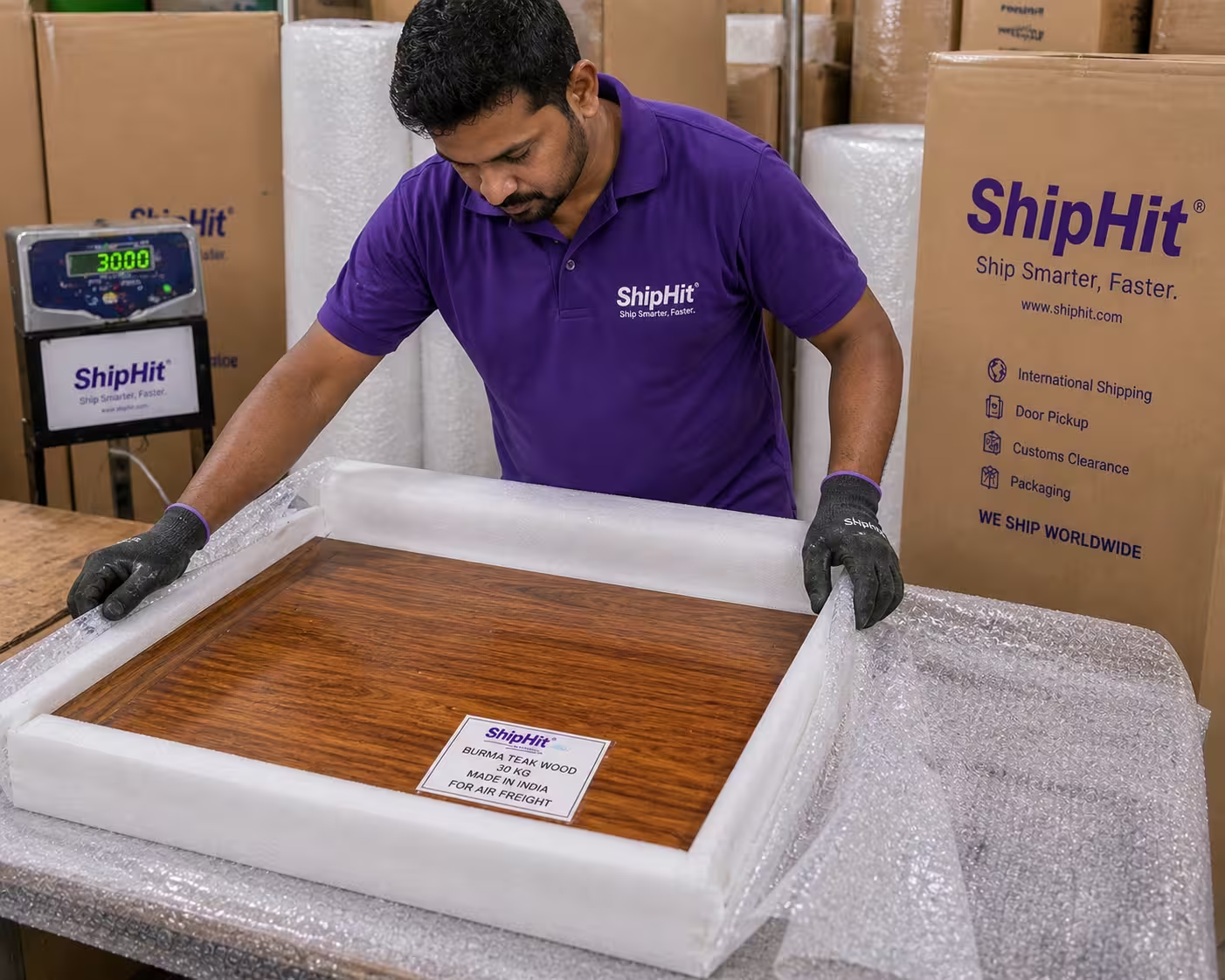
- 1
Step 1
Condition audit and measurement
The piece is photographed from every side, including the underside and any existing marks, and measured assembled. Those images are what an insurance claim is settled against.
- 2
Step 2
Dismantle what comes apart
Legs, shelves, glass panels and removable tops come off where the joinery allows. Fittings are bagged, labelled and taped inside the crate, never loose.
- 3
Step 3
Brace the joints
Anything that can rack — a table frame, a chair, a bed — is braced diagonally so vibration cannot work the joints loose over a long flight.
- 4
Step 4
Wrap breathable, not airtight
Polished surfaces get cloth or tissue first, then padding. Plastic goes on the outside as a moisture barrier, never sealed against the polish, so the wood is not trapped in its own condensation.
- 5
Step 5
Protect corners and carved edges
Rigid protectors on every edge and moulding. Carved and turned detail gets individual padding, because it takes the first knock otherwise.
- 6
Step 6
Crate on an ISPM 15 pallet
The piece goes into a heat-treated timber crate on a stamped pallet, so it can be forklifted without a strap touching the furniture.
Crate and carton grade genuinely matter with something this heavy and this rigid, and it is the place people economise that most reliably costs them — our comparison of 10-ply against 5-ply corrugated board explains why furniture needs the heavier grade wherever board is used at all.
Why the crate needs the IPPC mark
The furniture is the cargo, but the crate around it is wood packaging material, regulated separately. Solid wood packaging entering the USA, EU, UK or Australia must be heat-treated and carry the IPPC wheat symbol with a country code, producer code and the treatment code HT. Without it the crate can be quarantined, treated at your cost or destroyed — with the furniture inside. Plywood and engineered board crates are exempt.
The cost
What Wooden Furniture Costs to Ship
Furniture is billed on the space it occupies, so the crate you build decides the invoice more than the wood inside it does.
Air freight charges on whichever is higher, actual weight or volumetric weight from the crate's dimensions. Furniture is bulky relative to its mass, so volumetric wins almost every time — which is why dismantling matters commercially as well as structurally.
- Crate to the piece — Every spare centimetre of crate is volume you pay for across the whole journey.
- Dismantle where the joinery allows — Removable legs, shelves and tops transform the cube. Fixed carved pieces cannot be reduced and price accordingly.
- Crating is a one-time cost — Heat-treated timber, the pallet and the labour sit on top of freight, not inside the per-kg rate.
- Insure at honest declared value — Not optional for an antique or commissioned piece. The pre-packing photographs are what a claim is assessed against.
To work out the chargeable weight before booking, the formula and worked examples are set out in our guide to actual weight versus volumetric weight which applies directly to a large crated consignment.
Paperwork
Documents, Duty and Destination Rules
Ordinary merchandise with an extra biological layer. The commercial invoice does most of the work.
| Destination | Position as of August 2026 |
|---|---|
| USA | A Lacey Act PPQ 505 declaration is required. De minimis was suspended for all countries on 29 August 2025, so every consignment is a formal entry, with the reciprocal tariff on Indian goods cut from 50% to 18% on 2 February 2026. |
| UK | Import VAT on the declared value, duty above £135, and UK Timber Regulation due diligence for commercial placings. |
| EU | EUDR due diligence from 30 December 2026. From 1 July 2026 the EU removed its €150 duty exemption and applies a flat €3 per parcel. |
| Australia | The strictest regime for wood. Timber and packaging must meet BICON conditions, with a packing declaration and likely inspection on arrival. |
| Canada, UAE, Singapore | Straightforward. Canada's courier de minimis from India is only CAD 20; the Gulf and Singapore apply VAT or GST above local thresholds. |
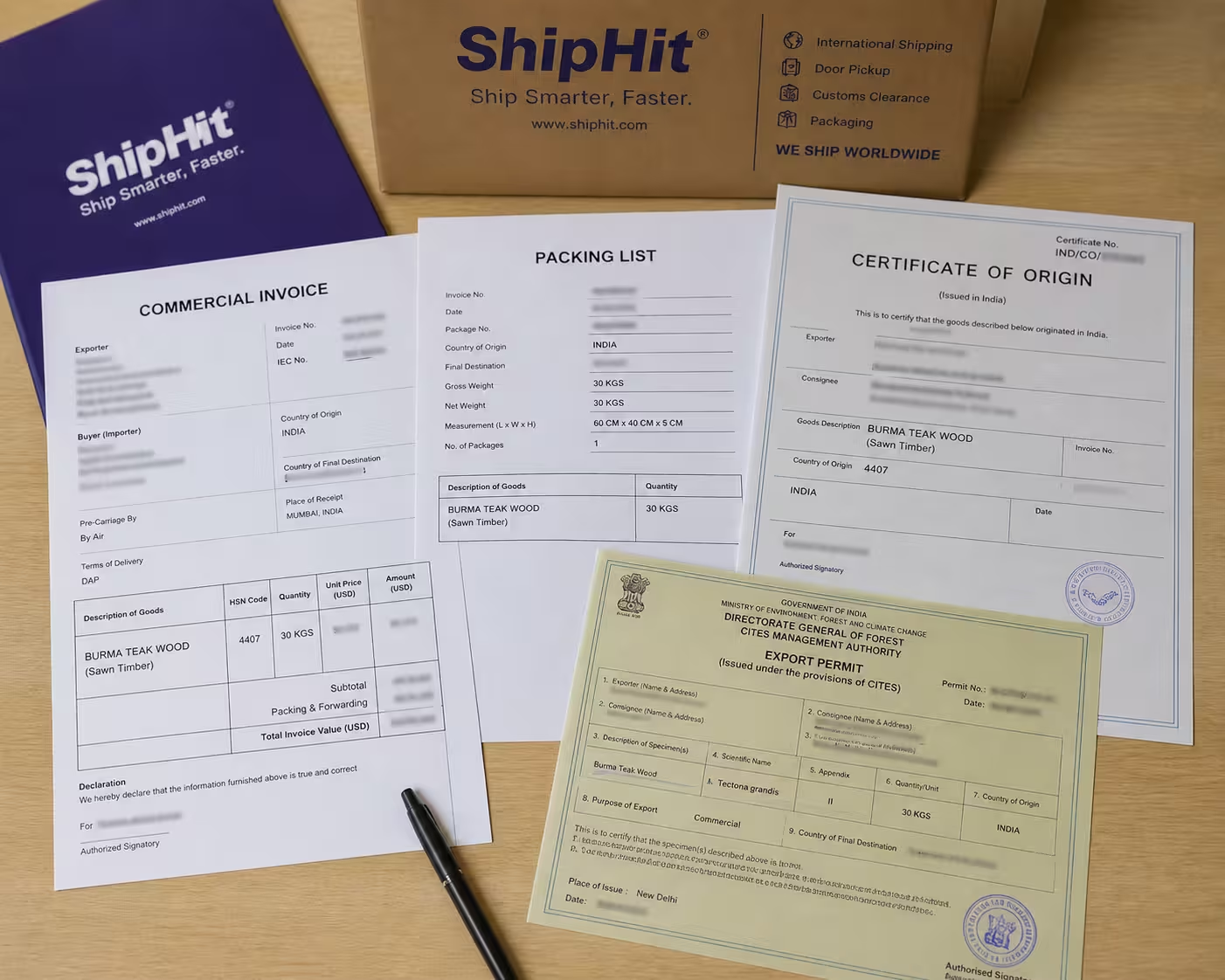
What ShipHit needs before quoting
- Item description with dimensions — dining table, carved cabinet, bed frame, decor piece
- Botanical species of every wood in the piece — Tectona grandis for teak, plus any inlay or trim species
- Country of harvest — India for the plantation and farm-grown teak ShipHit exports
- HS classification — 9403 for wooden furniture, 4420 for carved wooden decor and boxes
- Honest declared value, with maker or purchase records for a commissioned or antique piece
- Sender KYC (PAN or Aadhaar) and the buyer's full address and contact number
Special cases
The Pieces That Need a Second Look
Most furniture ships without incident. These four are the exceptions worth raising before you book.
What genuinely stops a wood shipment
- Timber of Myanmar origin. The EU and US sanction Myanma Timber Enterprise, the sole legal source of Myanmar timber — a de facto ban in those markets. ShipHit exports Indian-grown teak, and the declared country of harvest says so.
- Furniture over 100 years old. An antiquity under the Antiquities and Art Treasures Act, 1972. It must be ASI-registered and cannot be exported. Age is assessed on the piece, not on when you acquired it.
- Untreated wooden crating. Wood packaging without the IPPC heat-treatment mark is refused, treated at your cost or destroyed on arrival, whatever is inside it.
- A vague species description. "Wooden furniture" is not a species. For the USA that is now a defective Lacey Act declaration, not merely an unhelpful one.
Rosewood inlay, beading or handles
Finished furniture containing Dalbergia was exempted from CITES permits by Annotation #15 in November 2019. The exception is Brazilian rosewood (Dalbergia nigra), rare in Indian furniture but present in some older pieces.
Sandalwood components
Indian sandalwood is separately controlled under Indian law and is not treated like teak. Declare it at the quoting stage, not after collection.
Marble, glass or stone tops
These travel as a separate fragile item in their own crate, never fixed to the furniture. A mounted stone top is the commonest cause of a destroyed table.
Other Indian craft alongside
Bronze, brass and stone pieces crate differently and carry their own customs profile. See the handicrafts guide
Finishes, solvents and polishes cannot travel by air with the furniture at all. Our reference on what cannot be sent by international courier is worth a scan before the crate is closed.
Getting it collected
Routes and Door Pickup Across Tamil Nadu
Furniture is the one consignment nobody should be moving themselves, and the one most likely to need dismantling before it is crated.
The pickup team measures the piece assembled, decides what comes apart, builds the crate to the reduced dimensions and collects the documents in one visit. For a commissioned piece, collection can be arranged straight from the workshop.

Most furniture consignments route through Chennai, where crating and airport movement are coordinated together — our international courier service in Chennai handles the majority of large wood shipments.
Workshops across the western belt are collected from our Coimbatore branch with Tiruppur, Pondicherry and Mayiladuthurai covering the surrounding towns.
Quick answers
Frequently Asked Questions
01Can I send wooden furniture abroad by international courier from India?
Yes, regularly — to the USA, UK, Canada, Australia, the Gulf and Singapore. The piece is measured assembled, dismantled where the joinery allows, braced, corner-protected and crated on a heat-treated pallet. The paperwork needs the botanical species and country of harvest, which is the part most senders overlook.
02Does teak wood need a CITES permit to export?
No. Teak (*Tectona grandis*) is not listed on any CITES appendix, so teak furniture carries no CITES obligation. The confusion comes from rosewood, a different genus — and even there, finished furniture containing *Dalbergia* was exempted by Annotation #15 in November 2019, with Brazilian rosewood (*Dalbergia nigra*) the one exception.
03What is the Lacey Act declaration and does it apply to my furniture?
For the USA, yes. Since 1 December 2024 imported furniture requires a PPQ 505 declaration filed through CBP before arrival, naming the genus and species of every wood, the country of harvest, quantity and value. Penalties reach USD 250,000 per violation plus forfeiture, so a vague description is a real risk rather than a formality.
04Is Burma teak legal to export from India?
It depends what the phrase means. In the Indian trade it is usually a grade name for dense, straight-grained teak rather than a statement of origin, and Indian-grown teak of that grade exports normally. Genuinely Myanmar-harvested timber is different: the EU and US sanction Myanma Timber Enterprise, the sole legal source of Myanmar timber, which functions as a ban in those markets. ShipHit exports Indian-grown teak and declares the harvest country accordingly.
05Can I export antique wooden furniture from India?
Not if it is over one hundred years old. Under the Antiquities and Art Treasures Act, 1972 such a piece is an antiquity, must be registered with the Archaeological Survey of India, and cannot be exported. A recently made piece in traditional style is not an antiquity and ships normally.
06Does the wooden crate need special treatment?
Yes. Solid wood packaging entering the USA, EU, UK or Australia must be heat-treated and marked under ISPM 15 with the IPPC symbol, a country code, a producer code and the code HT. Untreated crating can be quarantined, treated at your cost or destroyed with the furniture inside. Plywood crates are exempt.
07How is the cost of shipping furniture calculated?
On volumetric weight almost every time, because furniture is bulky relative to its mass. The crate's dimensions drive the price, which is why dismantling matters commercially — a table shipped with its legs off occupies a fraction of the volume. Crating is a one-time cost on top of freight.
08Should a marble or glass top travel with the table?
No. Stone and glass tops travel as separate fragile items in their own crate, never left mounted. A stone top still fixed to its base is the commonest cause of a destroyed table in transit.
09What is the HS code for wooden furniture?
Wooden furniture falls under HS heading 9403, and carved wooden decor, boxes and ornaments under 4420. ShipHit prepares the classification alongside the species declaration.
Send Your Furniture Crated, Declared and Delivered to the Door
Send photographs with rough dimensions, tell us the wood and whether there is any inlay, and we will confirm what comes apart, what the crate will measure and what the declaration must say before you commit.
For a commissioned piece still with the maker, schedule a doorstep pickup and we will handle dismantling, crating and documentation.
Buying from a dealer who will not export directly? Our Buy & Ship service collects on your behalf and ships the piece onward.