
Food Courier · Courier Mode · Door Pickup · Customs Guidance
International Courier for Sending Indian Sweets and Snacks Abroad: Which Sweets Travel and Which Are Seized
Every Diwali the same parcels are opened at the same borders and the same thing happens: the mysore pak arrives perfectly, and the peda is confiscated. Indian sweets are not one category to a customs officer. They split cleanly into two, and the dividing line is milk. Get that one distinction right and a sweet box is among the easiest things to send from India; get it wrong and the best part of the box is destroyed before it reaches anyone.

Customs & Shipping Consultant, ShipHit
The dividing line
Milk
Khoya, paneer and condensed milk are what get a sweet seized.
Travels perfectly
Mysore Pak
Ghee and besan, low moisture, no dairy solids.
Named by Australia
Burfi, Peda
Along with rasmalai and rasgulla, in its own guidance.
Book by
3 Weeks Out
For a festival delivery, counting backwards from the date.

The dairy line, and why it decides everything
Milk-based sweets are the single most seized Indian food category in the world. It is worth understanding why, because the reasoning tells you exactly where the boundary falls.
Dairy from a country not approved for dairy export is restricted or prohibited on personal import into the USA, UK, EU, Canada and Australia. This is disease control — foot-and-mouth and similar risks are managed by keeping animal products out — rather than any judgement about hygiene or quality. It follows that the officer has no discretion, home-made makes no difference, and seized food is destroyed without compensation or appeal.
| Sweet | Made from | Ships? |
|---|---|---|
| Burfi, peda, kalakand | Khoya (reduced milk solids) | No — dairy. The most commonly seized of all. |
| Rasgulla, rasmalai, cham cham | Paneer or chhena, often in syrup | No — dairy, and wet as well. |
| Milk halwa, basundi, kheer mixes | Milk solids or milk powder | No — dairy. |
| Mysore pak | Besan, ghee, sugar | Yes. Ghee is treated differently from milk solids, and moisture is low. |
| Besan laddu, boondi laddu | Gram flour, ghee, sugar | Yes, when properly dry and sealed. |
| Badusha, adhirasam, athirasam | Flour, ghee, jaggery or sugar | Yes. |
| Coconut burfi, jaggery sweets, chikki | Coconut, jaggery, nuts | Yes — no dairy at all. Check nut rules for Australia. |
| Dry fruit halwa, Tirunelveli halwa | Wheat, ghee, sugar | Usually yes, though it is heavy and needs a rigid container. |
The test is whether milk solids are an ingredient, not whether the sweet tastes milky. If khoya, paneer, chhena, condensed milk or milk powder went in, assume it will not travel.
Ghee is not the problem people think it is
Ghee is clarified butterfat and is treated more permissively than milk solids in most markets, which is why the entire ghee-and-flour family of sweets travels while the khoya family does not. Declare it accurately as ghee rather than as butter, and keep the quantity domestic. If a destination is unusually strict, ShipHit will flag it before the parcel is collected.
What to send instead
Every restricted favourite has a substitute that travels, and in most cases it also survives the journey better.
This is worth deciding with whoever is doing the cooking or buying, before the box is filled. A sweet chosen for its shipping behaviour rather than its sentimental weight arrives intact, and the sentiment survives the substitution better than it survives a seizure notice.
The savoury half of a festival parcel behaves quite differently — murukku, thattai and mixture have their own packing and shelf-life problems, and we have covered those separately in our guide to Homemade indian snacks guide which pairs with this one for a full festival box.
- Instead of peda or burfi — mysore pak, besan laddu or coconut burfi made with jaggery.
- Instead of rasgulla or rasmalai — dry jaggery sweets, chikki or adhirasam. Wet syrup sweets are a packing problem as well as a customs one.
- Instead of kalakand — Tirunelveli halwa or dry fruit halwa, in a rigid tin.
- Instead of a mixed shop box, which almost always contains at least one milk sweet — a box assembled deliberately from the dairy-free list.
- Shop-bought boxes are the most common failure. A sealed retail assortment is convenient, but if one tray in it is khoya-based the whole box can be opened and the questionable item removed.
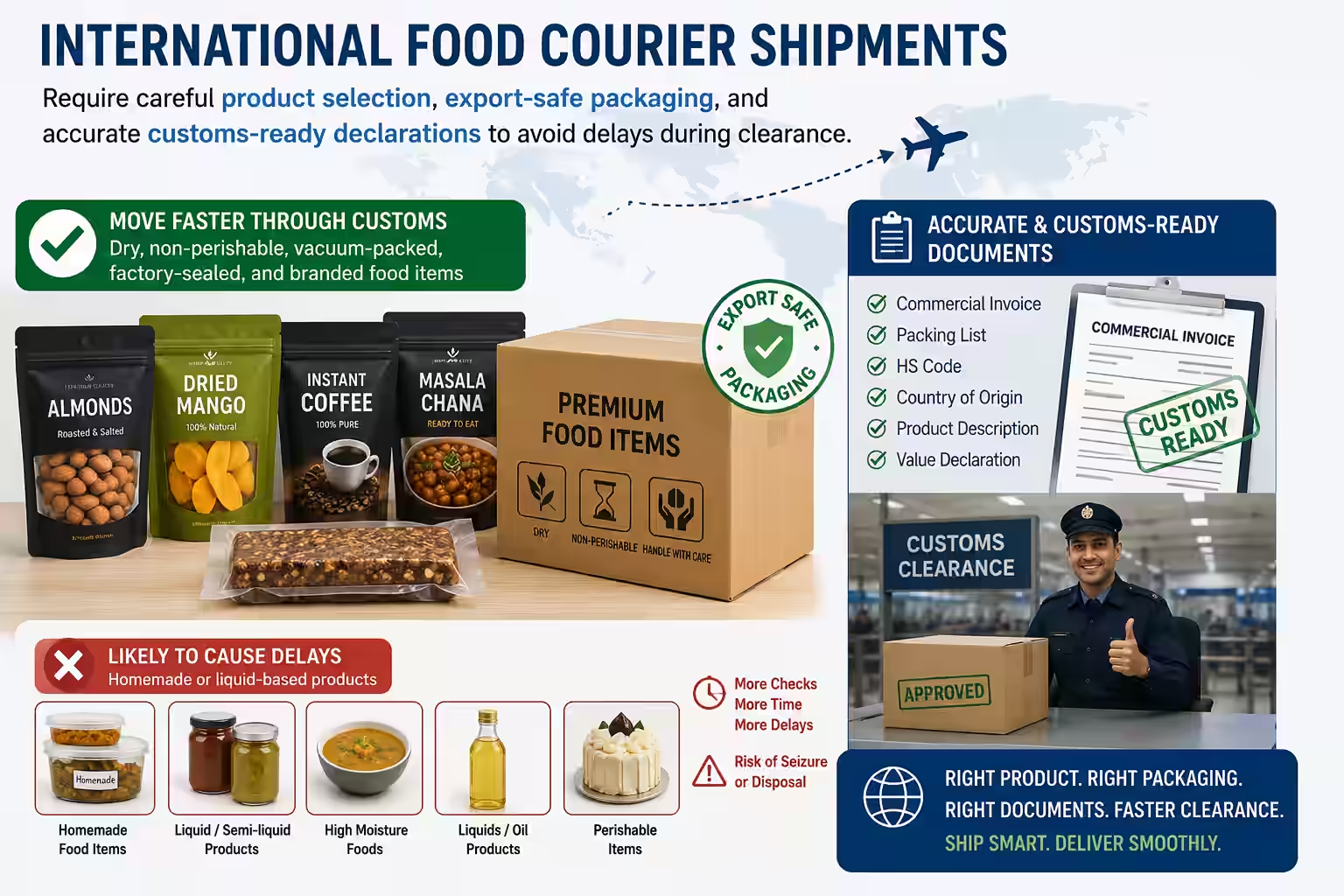
Packing a sweet box that arrives intact
Sweets fail in three ways: they crush, they sweat, and they leak ghee into everything around them.
Most Indian sweets are denser and more fragile than they look, and almost all of them carry enough fat to migrate through a paper box over a week in transit. Rigid containers and a genuine moisture barrier solve both problems at once.
- Rigid tins or hard containers, never paper sweet boxes — a retail box collapses under stacking and the contents arrive as fragments.
- Let anything freshly made cool completely before sealing. Sealing warm creates condensation, and condensation turns a dry sweet sticky.
- Separate each layer with parchment so pieces do not fuse into a single block.
- Line ghee-heavy sweets with an inner barrier and put the container in its own sealed bag — ghee will find its way through cardboard.
- Fill every void so nothing shifts. Movement is what turns a laddu into powder.
- Date-label everything, including shop-bought items whose printed date is hard to find.
Keep sweets and pickles apart
Oil from a pickle jar migrating into a sweet tin ruins both. If the parcel carries both, they belong in separate inner bags and ideally at opposite ends of the carton, with absorbent material around the pickle.
Declaring a sweet box, and timing it for a festival
Two practical things decide whether the parcel arrives clean and on time.
Vague descriptions cause inspections, and inspections cost days. Write each item with what it is made from — "besan laddu 500g" tells an officer everything, "sweets" tells them to open the box. If the sweets were made at home and sent as a personal gift, say so on the label.
The customs position for each destination — what the USA, UK, EU, Canada, Australia and the Gulf each allow — is set out once in our International food shipping guide rather than repeated on every food page.
If the sweets were made at home rather than bought, there is a US exemption that applies specifically to that case, and we have written it up in our guide to Homemade food guide along with the wording to put on the declaration.
Collection is from the door across Tamil Nadu, with most festival consignments routing through our Send sweets & snacks from Chennai and branches in Coimbatore, Tiruppur, Pondicherry and Mayiladuthurai.
- List items individually with contents and weight; give an honest value based on ingredient or purchase cost.
- Add "homemade, personal gift, not for sale" where that is true — it is what makes a home-cooked parcel legally distinct.
- Keep quantities domestic. Ten identical sealed boxes reads as retail stock regardless of intent.
- For Diwali, book about three weeks ahead. Transit is 5-8 working days to the USA and 4-7 to the UK, before any customs examination, and the weeks before a major festival are the busiest of the year.
Frequently Asked Questions
Can I send Indian sweets abroad by international courier?
Yes, provided they are not milk-based. Ghee and flour sweets — mysore pak, besan laddu, badusha, adhirasam — and jaggery or coconut sweets travel well. Milk sweets made with khoya, paneer or condensed milk are dairy products and are restricted or prohibited on personal import into the USA, UK, EU, Canada and Australia.
Why are burfi and peda not allowed?
Because they are made from khoya, which is reduced milk solids, and dairy from a non-approved country is restricted on personal import into most Western markets. It is disease control rather than a food safety judgement, so the rule applies identically to home-made and shop-bought sweets. Australia names burfi, peda, rasmalai and rasgulla specifically in its own guidance.
Which Indian sweets are safest to send?
Mysore pak is the reliable answer — ghee, besan and sugar, no milk solids and low moisture. Besan and boondi laddu, badusha, adhirasam, coconut burfi made with jaggery, chikki and dry halwa all travel well too. Choose dry over syrupy in every case.
Can I send a shop-bought mixed sweet box?
It is the commonest way parcels run into trouble, because most retail assortments contain at least one khoya-based tray. If any item in the box is milk-based, the box can be opened and that item removed, with the delay affecting everything else inside. Assembling a box deliberately from dairy-free sweets is safer than buying a ready one.
Is ghee allowed in international courier?
Generally yes. Ghee is clarified butterfat and is treated more permissively than milk solids in most markets, which is why ghee-based sweets travel while khoya-based sweets do not. Declare it accurately as ghee, keep quantities domestic, and ShipHit will confirm the position for your destination before collection.
How should sweets be packed for shipping?
In rigid tins or hard containers rather than paper sweet boxes, with parchment between layers, everything completely cool before sealing, and ghee-heavy items in their own sealed bag. Fill the voids so nothing shifts — movement is what reduces a laddu to powder.
When should I book a Diwali sweet parcel?
About three weeks before the date. Transit runs 5-8 working days to the USA and 4-7 to the UK and Europe before any customs examination, and the fortnight before a major festival is the busiest period of the year on these routes.
What happens if a milk sweet is found in my parcel?
It is seized and destroyed, with no compensation. If it was packed alongside other items, the carton is usually opened and examined, which delays everything else in it. There is no appeal process worth pursuing for a food seizure, so leaving the item out is the only real protection.
Related shipping guides
More routes and guides not mentioned above.