
International Courier for Homemade Indian Snacks from India

This guide explains how international courier from India handles Indian snacks — murukku, mixture, omapodi, seedai and the tray of fried savouries — covering which varieties survive, what customs looks for, and how to pack a tin.
Savoury snacks are the easiest Indian foods to send, and the easiest to get wrong. Their shape is the problem: every arm, spiral and wafer is a lever waiting to snap.
Shelf Life
3–4 Weeks Typical
Low-moisture fried savouries outlast transit.
Customs
The Label Decides
Sealed FSSAI-labelled packs clear; unlabelled tins get held.
Real Risk
Breakage, Not Rejection
Kai murukku, achu murukku and chips are most fragile.
Billing
Volume, Not Weight
Light and bulky, so charges follow volume.

Customs & Shipping Consultant, ShipHit
Start here
Why Indian Savoury Snacks Travel Better Than Most Foods
Moisture and fat that can turn make a food risky in transit. Both favour fried savouries.
Deep frying drives out almost all the water, leaving a dry, oil-sealed snack. A well-made murukku, mixture or omapodi holds texture for three to four weeks with no preservatives.
Indian snacks do not spoil in transit. They shatter. Pack for pressure, not for temperature.
These snacks do not spoil — they shatter. If your box also carries sweets, our guide to sending Indian sweets and snacks abroad by international courier covers which are worth attempting and which are not.
Variety by variety
The Snack List: Which Indian Snacks Survive the Journey
Most are rice, gram or urad savouries, but their shapes give completely different survival rates.
| Snack | What it is | Fragility | Verdict |
|---|---|---|---|
| Thenkuzhal | Extruded spirals | Low–medium | Best traveller |
| Murukku | Coiled rice-flour savoury | Medium | Fine in a tin |
| Kai murukku | Hand-coiled rings | Very high | Single flat layers only |
| Achu murukku | Pressed rosette | Very high | Wafer-thin; nest individually |
| Ribbon pakoda | Ribboned strips | Medium | Layer flat, not loose |
| Thattai | Flat crisp discs | Medium–high | Stack on edge |
| Omapodi | Gram-flour sev | Low, but compacts | Ships well in a tin |
| Mixture | Savoury medley | Low | Fills gaps; settles |
| Kara boondi | Fried gram droplets | Low | Very forgiving |
| Seedai | Small round balls | Low | Densest and safest |
| Masala peanuts | Coated groundnuts | Very low | Unbreakable |
| Banana chips | Fried raw banana | Medium–high | Tin, never a pouch |
| Potato chips | Thin potato slices | High | Crushes if stacked |
| Tapioca chips | Cassava wafers | Medium–high | Tin them; they splinter |
| Jackfruit chips | Fried jackfruit | Medium | Declare as fried fruit |
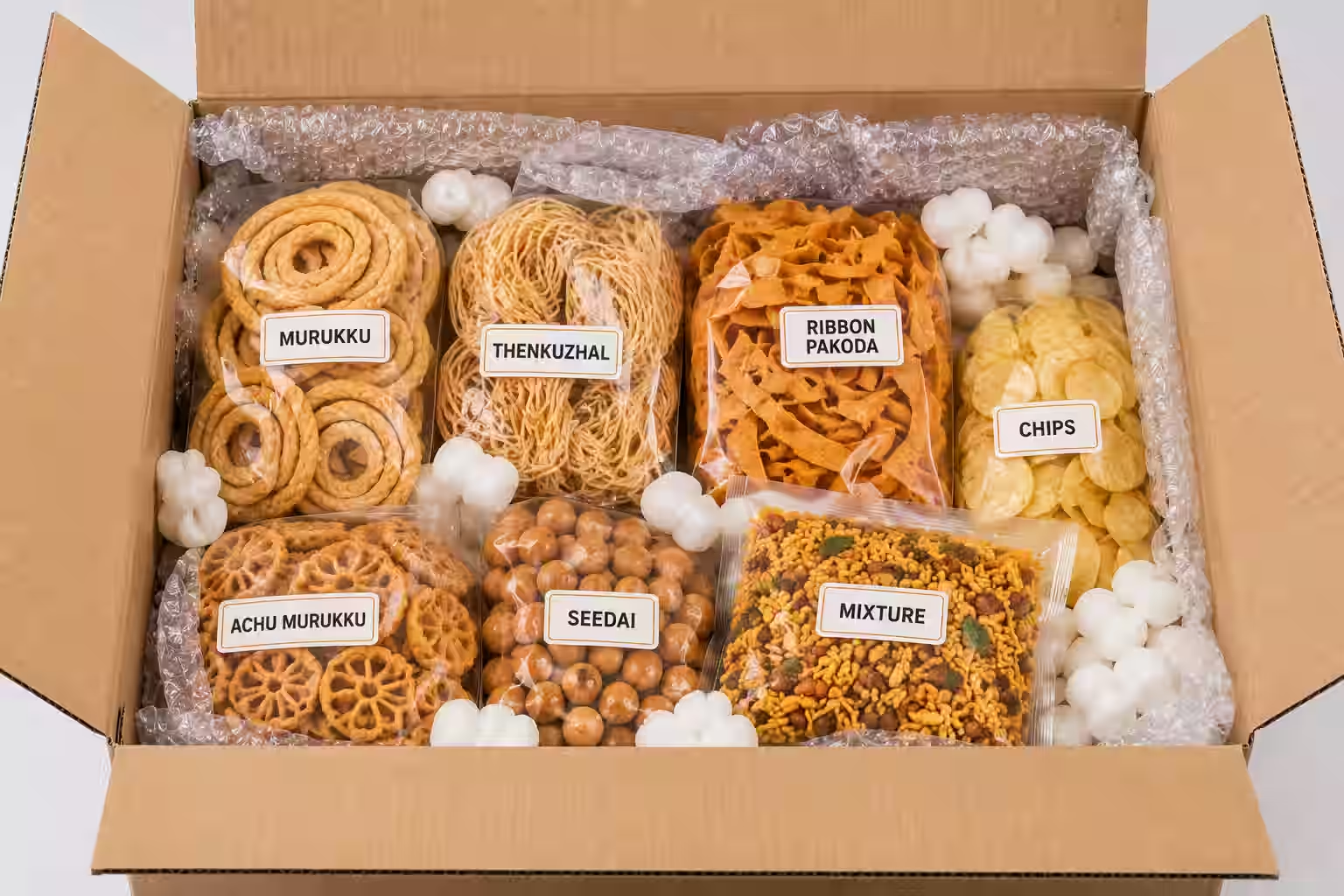
The murukku family: thenkuzhal, kai murukku and achu murukku
Thenkuzhal is safest — a short, thick spiral. Kai murukku is hand-coiled with nothing supporting the centre and achu murukku is a wafer-thin rosette; send both as the smaller part of the box, in single flat layers. Ribbon pakoda is fine layered flat, poor loose.
Mixture, kara boondi, omapodi and masala peanuts
The workhorses. Mixture and kara boondi are loose blends, so settling changes nothing; omapodi compacts but holds; masala peanuts and seedai are unbreakable. Use them to fill gaps around the fragile tins.
Banana, potato, tapioca and jackfruit chips
All four behave like thattai: flat, crisp and easy to crush, fine in a tin and poor in a pouch, with potato chips the most delicate. Describe jackfruit chips as fried fruit chips.
Customs reality
Homemade or Shop-Bought? The Packet Label Decides
The single biggest factor in whether your snacks clear quickly or sit in an inspection queue.
Officers check what the product is, what is in it, and how long it keeps. A sealed commercial pack answers all three in printed English. A homemade tin answers none, so it is held.
- Send sealed, branded packs — with the ingredient list, dates, net weight and FSSAI licence number.
- Keep the shop invoice — matched to your declaration — it settles valuation questions early.
- Declare the contents as food — explicitly. 'Gift' or a blank description invites inspection.
- Keep dairy and meat out — entirely. One ghee-based sweet pulls the shipment under stricter rules.
The rule in one line
Commercially packed and labelled clears. Loose and unlabelled gets held. Everything else is detail.
The method
How to Pack Indian Snacks So They Arrive Whole
Snacks are rarely crushed by one dramatic drop, but by the weight stacked above them for eight hours.
- Move everything into rigid tins — the shop's pouch is packaging, not protection.
- Fill each tin with crumpled food-grade paper; movement is what turns murukku into crumbs.
- Layer fragile varieties flat and single — kai murukku, achu murukku, potato chips never loose.
- Bag every tin against oil seepage, which stains cartons and weakens board.
- Tins at the base, lighter pouches on top.
- Fill all voids, then double-box, cushioned on all six sides.
- Label the carton as fragile food; keep the invoice accessible outside.
Carton grade matters for a box stacked in a cargo hold, and our comparison of 10-ply versus 5-ply corrugated boxes for international courier explains when heavier board earns its bulk.
Country notes
Destination Rules Worth Knowing Before You Book
Fried savouries are low-risk almost everywhere, but paperwork expectations differ.
| Destination | Typical treatment of packed savouries |
|---|---|
| USA | Accepted when commercially packed and labelled; keep quantities personal. |
| UK & Europe | Shelf-stable snacks are routine. Dairy in the same box attracts stricter handling. |
| Canada | As the USA. Clear labelling and an honest declared value clear fastest. |
| Australia & New Zealand | Strictest biosecurity. Declare everything; sealed commercial packs are the safe route. |
| Singapore & Malaysia | Established snack routes; quantity limits apply. |
Rules on rice, pulses and spice mixes are stricter, so read our guide to customs rules for sending Indian food abroad by international courier first.
Last-minute festival extras are the usual cause of a hold; the categories that stop a parcel are listed in our guide to items not allowed in international courier from India.
Pricing
What It Costs: Why Snacks Bill on Volume, Not Weight
A carton of snacks weighs almost nothing and takes up a lot of room. Courier pricing notices the room.
Charges follow volumetric weight — length × width × height ÷ 5000 — whenever that exceeds actual weight, and for fried snacks it almost always does. A 3 kg box can bill at 9 kg. The fix is a right-sized carton.
The arithmetic is worked through in our guide to actual weight versus volumetric weight in international courier pricing with worked examples.
Savouries often travel alongside masalas and pickles, covered in our guide to sending pickles, masala and spices abroad by international courier.
Planning
Timing Your Festival Snack Shipment
Snack shipments cluster around Diwali, Krishna Jayanthi and Karthigai — and so does everyone else's.
Book express two to three weeks before the festival and economy four to six weeks ahead; shelf life is on your side, airline capacity out of Chennai is not. Kai murukku, achu murukku and seedai sell out first.
If you would rather not source and pack it yourself, we can buy from the shop you name — that is what the Buy & Ship service is built for.
Quick answers
Frequently Asked Questions
01Can I send murukku and Indian snacks abroad by international courier from India?
Yes. Murukku, mixture, omapodi, seedai, thattai and fried chips are dry, vegetarian snacks with a three-to-four-week shelf life. Use sealed labelled packs and tin the fragile varieties.
02How long do Indian snacks stay fresh in transit?
Murukku, thenkuzhal, ribbon pakoda, mixture and seedai hold texture for three to four weeks without preservatives, because deep frying removes the moisture.
03Is homemade murukku allowed in international courier?
It is not banned, but it is the shipment most likely to be held. Officers rely on the printed label for product type, ingredients and shelf life.
04Which Indian snack breaks most easily in transit?
Kai murukku, achu murukku and potato chips, because all three are thin and unsupported. Pack them in single flat layers in a rigid tin.
05Can I send banana chips and tapioca chips overseas?
Yes, treated like any packed fried snack. Banana, potato, tapioca and jackfruit chips crush easily, so they need a rigid tin.
06How do I stop oil leaking from snacks during shipping?
Seal each tin inside a food-grade bag before it goes into the carton. Oil seepage stains the carton, weakens board and draws inspection.
07Why is my snack parcel charged more than it weighs?
Because pricing uses volumetric weight — length by width by height divided by 5000 — whenever that exceeds actual weight, so a 3 kg carton can bill at 9 kg.
Send Your Snacks the Way They Left the Kitchen
Tell us what you are sending and where it is going. We will confirm what clears there, pack the fragile varieties, and move the carton with door-to-door tracking.
Message the team on WhatsApp at 9159 688 688, or once your tins are ready we will schedule a doorstep pickup for your snack parcel.
We collect across Tamil Nadu, and our international courier service in Chennai handles same-city pickup around T. Nagar and Mylapore.