
Food Courier · Courier Mode · Door Pickup · Customs Guidance
International Courier for Food from India: What Can Be Sent, Country Rules, Costs and Customs Documentation
Food is the most-requested category in international courier from India and the one most likely to be seized. The reason is rarely the food itself — it is that senders treat every food as one category when customs treats them as four. A packet of factory-sealed murukku, a jar of home-made pickle, a box of milk sweets and a bag of whole spices face four different regimes in the same destination country. This guide sets out the categories, the rules that apply to each, and what the major destinations actually allow.

Customs & Shipping Consultant, ShipHit
Hard line everywhere
Meat & Dairy
The category customs seizes most, in every jurisdiction.
US requirement
Prior Notice
With a genuine personal-gift exemption for home-cooked food.
Safest category
Sealed & Dry
Commercially packaged, labelled, long shelf life.
Strictest destination
Australia
Declare everything. Undeclared food carries real penalties.
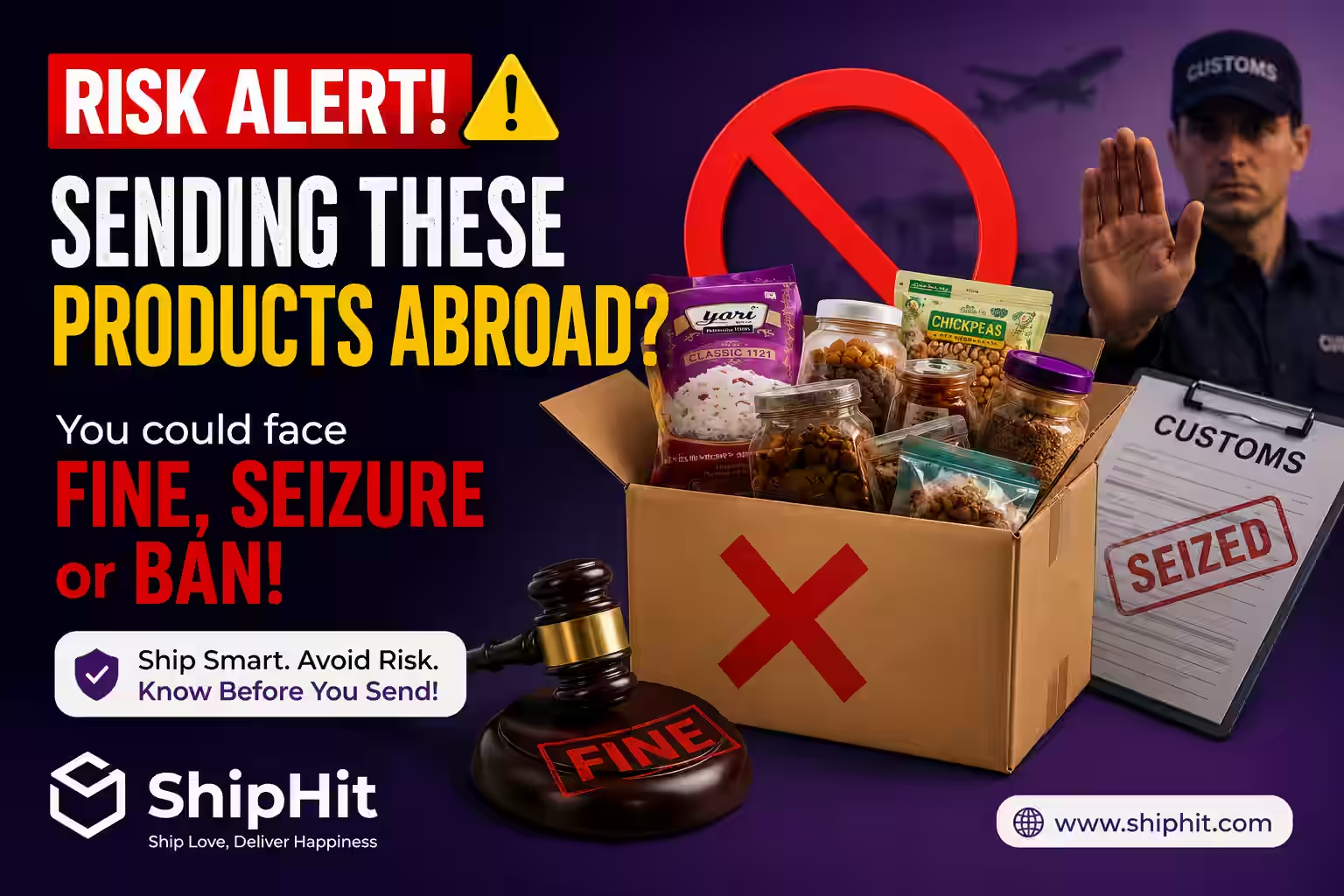
The four categories customs actually sees
Ranked by how easily they clear. Almost every seizure happens because something from the third or fourth group was packed as though it belonged in the first.
Customs officers are not judging whether your food is good. They are asking three questions: can it carry a pest or a disease, can it be identified from its label, and is it a commercial consignment pretending to be a gift. The four groups below map onto those questions directly.
| Category | Examples | How it clears |
|---|---|---|
| 1. Sealed dry goods | Factory-packed savoury snacks, biscuits, instant mixes, packaged sweets with a printed date | Easiest. A printed ingredient list, manufacturer and expiry date answer every question an officer has. |
| 2. Dry home-made | Murukku, thattai, podi, laddu and other home-cooked dry items | Usually fine when declared honestly and labelled by hand with contents and the date made. Australia is the exception. |
| 3. Oil, liquid and semi-wet | Pickles in oil, chutneys, ghee, thick pastes | Ships, but needs leak-proof packing and honest declaration. Some destinations cap quantity. |
| 4. Dairy, meat and fresh | Milk sweets, khoya, paneer, ghee-heavy fresh items, anything with egg or meat, fresh produce | The hard line. Restricted or banned into most Western markets and seized without compensation. |
The commonest mistake is putting a category 4 item in the same carton as category 1 and 2. If one item is questioned, the whole box is opened.
Shelf life is the quiet requirement
Most carriers and several destinations want a remaining shelf life well beyond the transit time — commonly at least three to six months on a commercially packed item. Something made last week with no date on it is not obviously fresh to an officer who opens the box a fortnight later. Date-label everything, including home-made items.
Dairy and meat: the line that does not move
If you remember one thing from this page, it is this. Milk-based sweets are the single most seized Indian food category worldwide.
Milk sweets — burfi, peda, rasgulla, rasmalai, kalakand, milk halwa — are dairy products, and dairy from a non-approved country is restricted or prohibited on personal import into most Western markets. This is not about food safety in the kitchen sense. It is disease control: foot-and-mouth, avian influenza and similar risks are managed by keeping animal products out, and the rules do not distinguish between a commercial pallet and a box from your mother.
Milk sweets are the reason the sweets category needs its own treatment rather than being lumped in with snacks, and we have set out which Indian sweets travel and which do not in our guide to Indian sweets & snacks guide with the dairy-free alternatives that arrive intact.
- Milk sweets are the problem, not sweets in general. Besan laddu, mysore pak, dry halwa and jaggery-based sweets usually travel fine.
- Ghee is treated differently from milk solids in several markets, but do not assume — declare it and ask before booking.
- Anything with egg, meat or fish is out. That includes dried fish, meat pickles and egg-based sweets.
- The UK tightened personal meat and dairy import rules in 2025 and 2026 in response to foot-and-mouth in Europe, with seizure and destruction at the border and fines up to £5,000.
- Australia advises specifically against Indian milk sweets — burfi, rasmalai, rasgulla and peda are named in its own guidance.
- There is no compensation for seized food, and no appeal worth the postage. The only real protection is not sending it.
The FDA Prior Notice rule, and the exemption most people miss
Food entering the United States generally requires advance notice to the FDA. Food you cooked at home and sent as a gift generally does not.
Under the Bioterrorism Act, food imported into the USA requires Prior Notice to the FDA before it arrives, and there is no exemption based on the size or value of the shipment. That sounds alarming for a family food parcel, and it is the single most misunderstood rule in this category.
This exemption is the legal backbone of the home-cooked food parcel, and it is why a box from your mother is treated differently from a box from a shop. We have written that case up in full in our guide to Homemade food guide including what to write on the declaration.
- The exemption turns on who made it and why it is being sent, not on what it is. Home-made and personal means exempt; commercial or resale does not.
- It does not override any other rule. Home-made milk sweets are still dairy and still restricted — the exemption removes the paperwork, not the prohibition.
- Food sent for charity is expressly not exempt.
- For a commercial food consignment, ShipHit files Prior Notice as part of the export documentation.
The personal-gift exemption
The FDA exempts food made by an individual in their own personal residence and sent by that individual as a personal, non-business gift to an individual in the United States. Food carried by a traveller for their own use is likewise exempt. Commercially produced food — anything factory-packed, and anything sent as part of a business — is not exempt and needs Prior Notice filed. FDA and CBP also apply enforcement discretion for genuinely non-commercial gift shipments.
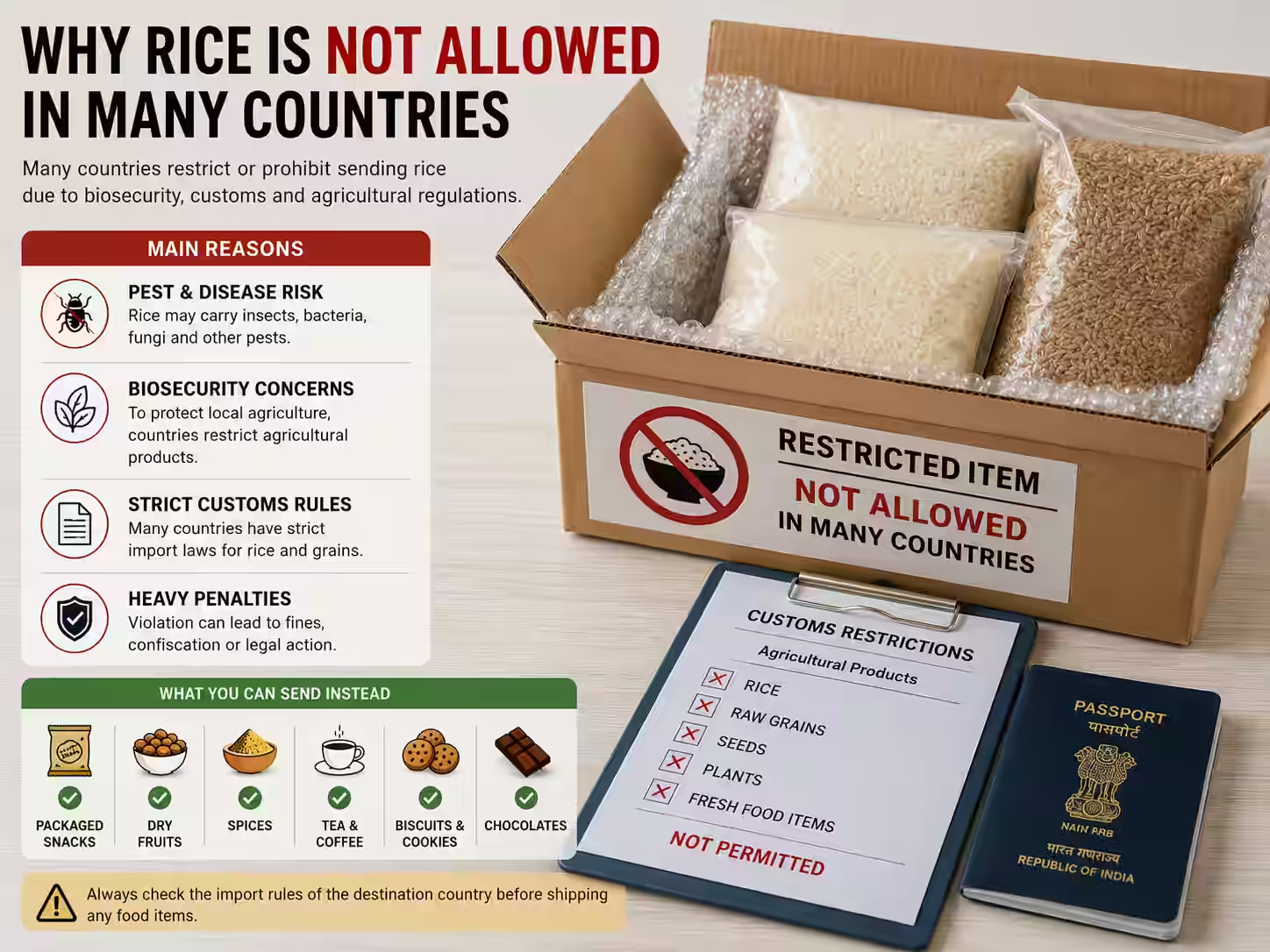
Country rules at a glance
The same parcel is treated differently in each market. These are the positions that matter most for Indian food.
| Destination | What to know |
|---|---|
| USA | Prior Notice required for commercial food, with the personal-gift exemption above. Dairy and meat restricted. Most dried and processed plant products enter without a permit or phytosanitary certificate, though citrus leaves and many seeds are prohibited. De minimis was suspended for all countries on 29 August 2025, so every consignment is now a formal entry regardless of value. |
| UK | Personal meat and dairy imports have been tightened sharply since 2025, with seizure, destruction and fines up to £5,000. Dry packaged goods and spices are straightforward. Gifts between private individuals under £39 are free of VAT and duty. |
| EU | Personal imports of meat and dairy from outside the EU are prohibited, with limited exceptions. Dry goods are fine. From 1 July 2026 the EU removed its €150 duty exemption and applies a transitional flat duty of €3 per parcel. |
| Canada | Dairy and meat restricted; dry goods generally acceptable with clear labelling. Courier de minimis from India is only CAD 20. |
| Australia | The strictest regime. Everything edible must be declared. Milk sweets, fresh produce, nuts and seeds are high risk; pickles and chutneys are permitted if preserved by an accepted method; spices, tea and rice must be declared and may be inspected. Undeclared food carries real penalties. |
| UAE, Singapore, Malaysia | The most accommodating routes for Indian food. Sealed commercial packaging is expected, and quantities should look domestic rather than commercial. |
Verified 17 August 2026. Food rules change faster than any other category — ShipHit confirms the current position for your destination before dispatch.
Packing, declaring and what it costs
Food is billed on volume, seized on ambiguity and damaged by moisture. All three are solved before the carton is sealed.
Dry food is light and bulky, so it is almost always billed on volumetric weight rather than actual weight. That makes packing tight as important as packing well. Moisture is the other enemy: anything fried absorbs humidity and goes soft, and anything oily will find a way out of its container.
Because dry food prices on the space it occupies rather than its mass, it is worth understanding how the two are compared before you choose a carton — the formula and worked examples are in our guide to Actual vs volumetric weight pricing guide which applies directly to a bulky food parcel.
Some items people assume are ordinary groceries are restricted in air freight outright. Our reference on Items not allowed in guide is worth checking before you shop for the parcel, not after.
- Vacuum-seal or double-bag dry items, then pack them in a rigid carton so they are not crushed.
- Oil and liquid items need a sealed inner container, a leak-proof outer bag and absorbent material around them.
- Label every item by hand if it is home-made: contents, date made, and "home-made, personal gift, not for sale".
- Write item-wise descriptions on the invoice. "Food", "snacks" and "gift items" invite an inspection; "rice flour murukku, 500g" does not.
- Never mix a doubtful item into a clean carton. If one item is questioned, the whole box is opened and delayed.
- Keep quantities domestic. Ten identical sealed packets look like retail stock, whatever your intention.
Guides for each food category
This page covers the rules every food parcel shares. These cover what changes by product.
Food is rarely the only thing in a family parcel. If yours also carries clothing or textiles, keep them in separate inner packaging — our guide to Saree & snack pickup guide covers the textile side and why the two should not share a bag.
Most food consignments are collected from home, and pickup runs across Tamil Nadu through our international courier service in Chennai with Coimbatore, Tiruppur, Pondicherry and Mayiladuthurai covering the surrounding districts.
Frequently Asked Questions
Can I send food abroad from India by international courier?
Yes, within limits that vary by food type and destination. Sealed commercially packaged dry goods are the easiest, home-cooked dry items are usually fine when declared and date-labelled, oil and liquid items need leak-proof packing, and dairy, meat and fresh produce are restricted or banned into most Western markets.
Do I need FDA Prior Notice to send food to the USA?
Not for a genuine personal gift you cooked yourself. The FDA exempts food made by an individual in their own residence and sent as a personal, non-business gift to an individual in the USA. Commercially produced food and any business shipment does need Prior Notice filed, which ShipHit handles as part of the export documentation. Food sent for charity is not exempt.
Why are Indian milk sweets so often seized?
Because they are dairy. Burfi, peda, rasgulla, rasmalai and kalakand are milk products, and dairy from a non-approved country is restricted or prohibited on personal import into the USA, UK, EU, Canada and Australia. It is disease control rather than food safety, and it applies to home-made and shop-bought alike. Besan laddu, mysore pak and jaggery-based sweets are usually fine.
How long does food need to stay fresh for courier?
Longer than you would expect. Carriers and several destinations look for substantial remaining shelf life — commonly three to six months on a commercially packed item — because the box may be opened by an officer well after dispatch. Date-label home-made items clearly so freshness is not left to guesswork.
Can I send pickles in oil abroad?
Yes to most destinations, with proper packing. The oil is the issue rather than the pickle: it needs a sealed inner container, a leak-proof outer bag and absorbent material around it, and it should never share a carton with textiles or documents. Australia permits pickles and chutneys preserved by an accepted method.
What happens if customs finds a restricted food item?
The item is seized and destroyed, with no compensation. If it was mixed into a larger carton, the whole box is typically opened and delayed while it is examined, and repeated problems can affect how future shipments from the same sender are treated. Keeping doubtful items out is far cheaper than arguing about them.
How much does it cost to courier food from India?
Dry food is light and bulky, so it is billed on volumetric weight rather than actual weight in nearly every case — the carton size drives the price more than the contents do. Packing tightly into a right-sized rigid box is the most effective way to control it.
Can I send food to Australia from India?
Yes, but it is the strictest destination and everything edible must be declared. Milk sweets, fresh produce, nuts and seeds are high risk; pickles and chutneys are allowed if preserved by an accepted method; spices, tea and rice must be declared and may be inspected on arrival. Undeclared food carries genuine penalties, so declare generously.