
International Courier for Homemade Food from India: What Ships, What Cannot, and the Rule That Protects a Home-Cooked Parcel
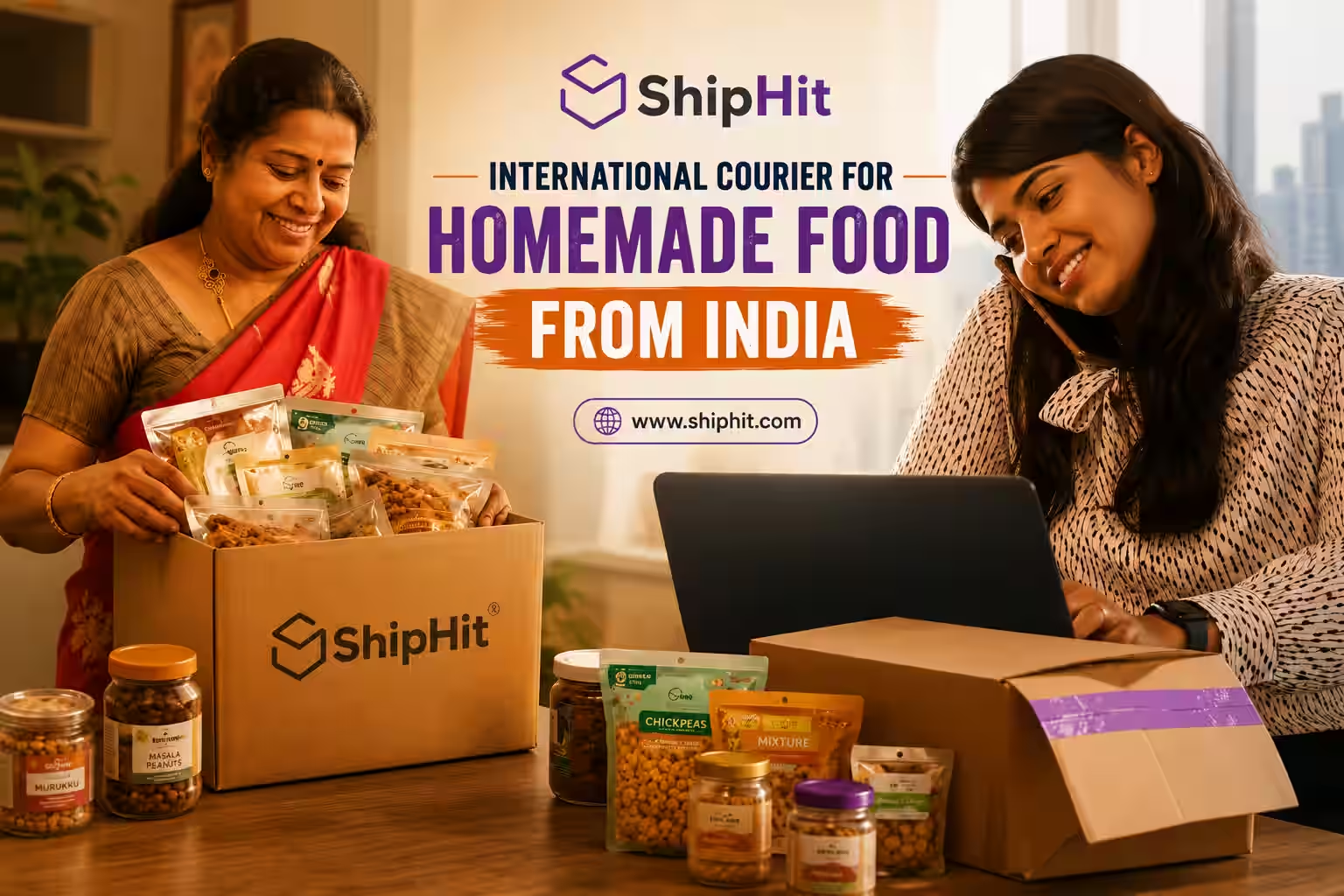
There is a particular silence that follows opening a parcel from home and finding the murukku has turned to powder, or the pickle has leaked into everything. It is not really about the food. It is about the four hours Amma spent making it, and the fact that none of that survived the journey.
Almost all of it is preventable, and one part of it is legal rather than practical: food you cook at home and send as a personal gift is treated differently from food bought in a shop. Most people never find that out. This guide covers what travels, what will be taken from you at the border, how to pack each kind, and the words to write on the label so a customs officer waves it through.

International Courier Expert, ShipHit
The rule that helps
Personal Gift
Food cooked at home and sent as a gift is exempt from US Prior Notice. Shop-bought food is not.
The hard line
Anything Dairy
Milk sweets are the most seized Indian food in the world. Home-made does not change it.
Best travellers
Podi & Papad
Dry, light, flat and almost impossible to damage or question.
Label everything
By Hand
Contents, date made, and the words 'homemade, personal gift, not for sale'.
Start here
The Rule That Protects a Home-Cooked Parcel
Food entering the United States generally needs advance notice to the FDA. Food from Amma's kitchen generally does not — and knowing why changes how you declare it.
Under the US Bioterrorism Act, imported food requires Prior Notice to the FDA before it arrives, and there is no exemption based on how small or how inexpensive the parcel is. Read that on its own and a box of home-made podi sounds like a customs problem waiting to happen. It is not.
The FDA exempts food made by an individual in their own personal residence and sent by that individual as a personal, non-business gift to an individual in the United States. Food a traveller carries for their own use is exempt on the same basis. What is not exempt is commercially produced food, anything sent as part of a business, and — specifically — food sent for charity.
What this does and does not do
The exemption turns on who made it and why it is being sent, not on what it is. It removes the paperwork; it does not remove any prohibition. Home-made milk sweets are still dairy, and dairy is still restricted — the exemption means you do not have to file Prior Notice, not that the sweets are suddenly allowed. Get both halves right and a home-cooked parcel is one of the simplest things to send.
The same logic runs through every food category, and the shared customs position for each destination — the USA, UK, EU, Canada, Australia and the Gulf — is set out in one place in our guide to international food shipping from India which this page sits underneath.
Before she starts cooking
What Travels, and What Will Be Taken
Worth settling before the kitchen work begins, because there is no way to pack a restricted item well enough to survive an inspection.
The milk-sweet rule is the one that causes the most heartbreak, because it is so often the thing a mother most wants to send. It is worth saying plainly: this is disease control rather than any judgement about her cooking, the officer has no discretion, and seized food is destroyed without compensation. Send mysore pak instead of peda and the parcel arrives.
Do not send
- Milk sweets — burfi, peda, rasgulla, rasmalai, kalakand, milk halwa. Dairy is restricted or banned into the USA, UK, EU, Canada and Australia, and home-made makes no difference.
- Anything with egg, meat or fish, including dried fish, meat pickles and egg-based sweets.
- Fresh produce, fresh curry leaves, raw coconut and anything still growing or perishable.
- Raw seeds and unroasted nuts in quantity — these attract plant-health rules, especially into Australia.
- Home-made items with no date and no label, which invite exactly the inspection you want to avoid.
Send freely
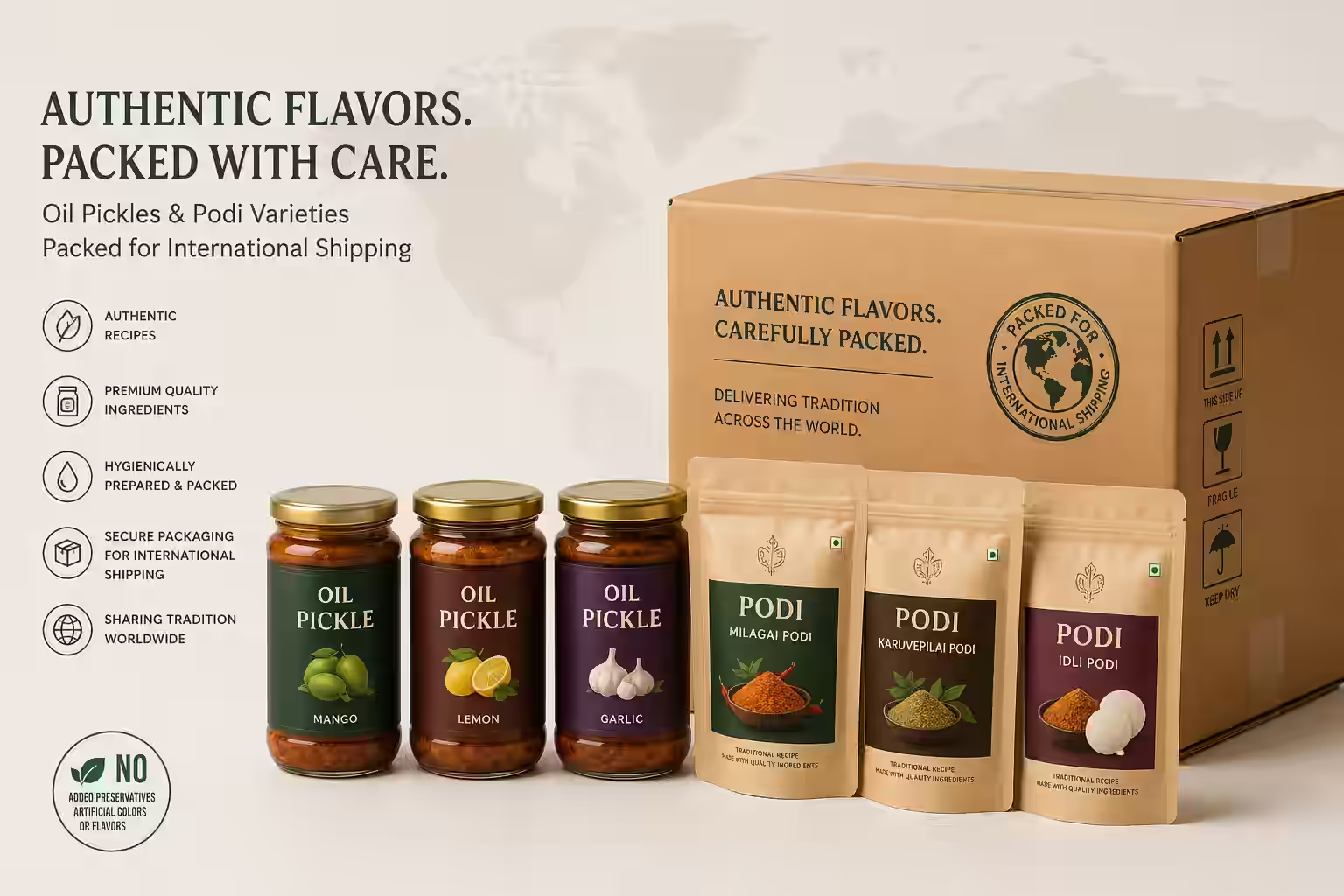
- Podi of every kind — idli podi, milagai podi, paruppu podi, curry leaf podi. Dry, light and the easiest thing on this list.
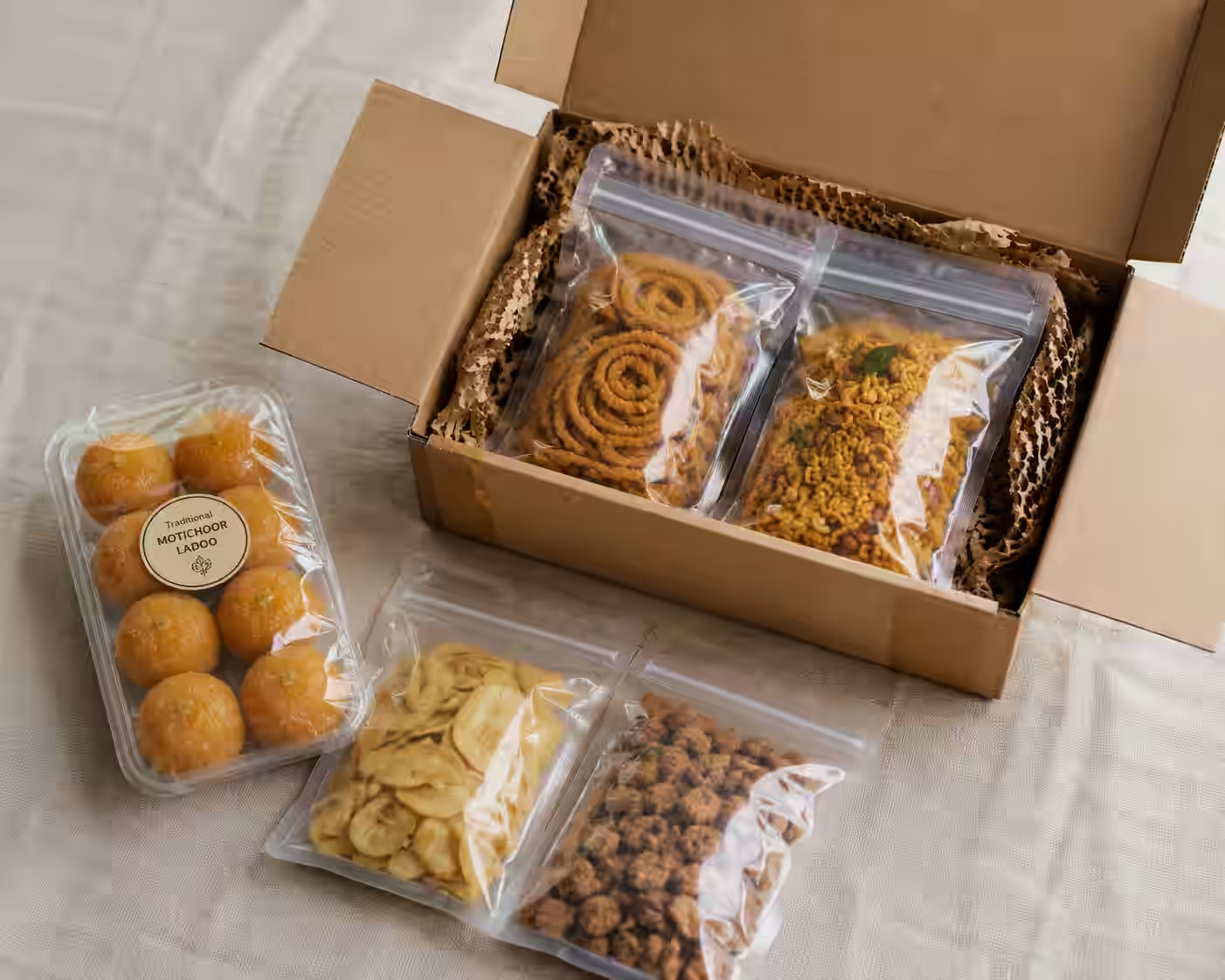
- Fried savouries — murukku, thattai, ribbon pakoda, seedai, mixture — sealed while properly cool.
- Papad, vathal and vadam, which pack flat and survive almost anything.
- Ghee-based dry sweets — mysore pak, besan laddu, badusha — where moisture is low and there is no milk solid.
- Pickles in oil, in a properly sealed jar with the leak-proofing described below.
- Roasted coffee powder, roasted nuts and dry spice mixes in airtight pouches.
Sweets are the category with the most exceptions and the most disappointment, so we have separated out which Indian sweets survive the journey and which do not in our guide to sending Indian sweets and snacks abroad with dairy-free alternatives for each restricted favourite.
The method
Packing So It Tastes Like It Did at Home
Two enemies: moisture, which softens everything fried, and oil, which escapes and ruins whatever it touches.
- 01
Cool completely before sealing
The commonest mistake in the whole category. Anything sealed even slightly warm creates its own condensation, and a week later the murukku is soft and the podi has clumped. Leave it out overnight.
- 02
Airtight first, then a second layer
Dry items go into airtight containers or vacuum pouches, then into a second bag. Fried savouries need rigid containers rather than pouches — a vacuum bag will crush a murukku into crumbs.
- 03
Seal oil twice and expect it to try
Pickle jars get their lids taped, then go into a sealed poly bag, then into a second bag with absorbent tissue around them. Assume the jar will do its best to leak and pack so it cannot matter.
- 04
Keep the wet away from the dry
Pickles and podi never share an inner bag. Oil migrating into a podi pouch is the second most common way a parcel disappoints.
- 05
Label every single item by hand
Contents, the date it was made, and the words homemade, personal gift, not for sale. This costs nothing and is the difference between an officer reading a label and an officer opening a container.
- 06
Pack tight into a rigid carton
Fill every void so nothing shifts. Dry food is light and bulky, so a right-sized box also keeps the volumetric weight down.
Quantities should look domestic
Twenty identical sealed packets of the same snack looks like retail stock no matter what you intended, and a consignment that looks commercial is treated as commercial — which loses you the personal-gift exemption entirely. Send a family's worth of variety rather than a shop's worth of one thing.
Paperwork
Writing the Declaration
Nearly every home-food parcel that gets held is held because the description was too vague to read, not because anything in it was wrong.
An officer looking at food, gift has learned nothing and has to open the box. An officer looking at rice flour murukku 500g, homemade, personal gift has learned everything and usually does not.
What to write on the invoice
List each item separately with its contents, weight and an honest value — the cost of the ingredients is a fair basis for home-made food. State the relationship where it helps: a parcel from a mother to a daughter is exactly the fact that makes the personal-gift exemption apply.
Never describe it as a sample, and never as a commercial order. Both cost you the exemption and neither is true.
What ShipHit needs before pickup
A photograph of the items laid out is usually enough. It lets the team flag anything restricted while it can still be swapped for something that travels, rather than after the carton has been sealed and collected.
Practicalities
Cost, Timing and Collection
Home food is light and bulky, so what you pay is set by the size of the box rather than the weight of what is in it.
Courier charges follow whichever is higher, actual weight or volumetric weight, and dry food is almost always the volumetric one. A carton packed tightly with the voids filled costs meaningfully less than the same food rattling around in a larger box — and it arrives in better condition, which is the same decision twice.
Transit is typically 5-8 working days to the USA and 4-7 to the UK and Europe. Worth counting backwards from a festival date rather than forwards from the cooking, and worth adding a few days for a customs examination that may never happen.
If you would rather not work it out yourself
Send us a photograph of what Amma has made and we will tell you what travels, what to swap and how to pack it, or book a doorstep pickup and the team will handle the packing and the paperwork.
If you want to understand the pricing before choosing a box, the formula and worked examples are set out in our guide to actual weight versus volumetric weight which applies directly to a food parcel.
Collection is from the kitchen it was cooked in — no carrying a heavy carton anywhere. Most parcels route through our international courier service in Chennai with Coimbatore, Tiruppur, Pondicherry and Mayiladuthurai covering the surrounding districts.
Quick answers
FAQs About Items Not Allowed in International Courier
Can I send homemade food abroad from India?
Yes, and home-cooked food is in some ways easier than shop-bought. The FDA exempts food made by an individual in their own residence and sent as a personal, non-business gift to an individual in the USA from its Prior Notice requirement. Dry items travel best — podi, murukku, papad, ghee-based sweets — and pickles in oil ship well when properly sealed.
Can Amma send homemade sweets abroad?
It depends entirely on whether they contain milk. Ghee-based dry sweets like mysore pak, besan laddu and badusha travel well. Milk sweets — burfi, peda, rasgulla, rasmalai, kalakand — are dairy products and are restricted or banned into the USA, UK, EU, Canada and Australia. Home-made makes no difference to that rule, and seized food is destroyed without compensation.
Do I need FDA Prior Notice for a homemade food parcel to the USA?
Not for a genuine personal gift. The exemption covers food made by an individual in their own home and sent by that individual as a non-business gift to an individual in the USA. It does not cover commercially produced food, business shipments, or food sent for charity. It also does not override any restriction — the exemption removes paperwork, not prohibitions.
How do I stop pickle leaking in the parcel?
Assume it will try. Tape the jar lid, put the jar in a sealed poly bag, then put that inside a second bag with absorbent tissue packed around it. Keep pickles away from podi and any dry item in their own inner bag, and never pack oil in the same carton as clothing or documents.
How do I keep murukku from breaking?
Rigid airtight containers rather than pouches, and let everything cool completely before sealing — sealing while warm creates condensation and softens the whole batch. Pack the containers so they cannot shift inside the carton, and fill the voids.
What should I write on the customs declaration?
Item-wise descriptions with contents, weight and an honest value based on ingredient cost. Add the words homemade, personal gift, not for sale. Vague entries like food or gift items are the main reason home-food parcels get opened and delayed.
How much homemade food can I send at once?
Enough to look like a family parcel rather than a shop's stock. There is no single number, but many identical packets of one item reads as commercial, and a consignment treated as commercial loses the personal-gift exemption. Variety in domestic quantities is the safer pattern.
How long does homemade food take to reach the USA or UK?
Around 5-8 working days to the USA and 4-7 to the UK and Europe, door to door, before any customs examination. Plan backwards from a festival date and leave a few days of margin.
Send What She Made, and Let It Arrive Properly
Send a photograph of what has been cooked and we will tell you what travels, what to leave out, and how to pack the rest. Collection is from the door, and the paperwork is ours.
CallFor a festival delivery, book early and work backwards from the date — schedule a doorstep pickup and we will collect from the kitchen it was made in.
Sending clothes or a saree in the same consignment? Our guide to sending sarees abroad with door pickup explains why textiles and food need separate inner packing.
Beyond Borders, Beyond Distance, Love Delivered.
Related shipping guides
More ShipHit guides on what can and cannot travel in an international parcel.